





Purchase Guides, Tips & Tutorials, Uncategorized
Smart Lift and Wheel Alignment Machines Selection for Your Shop
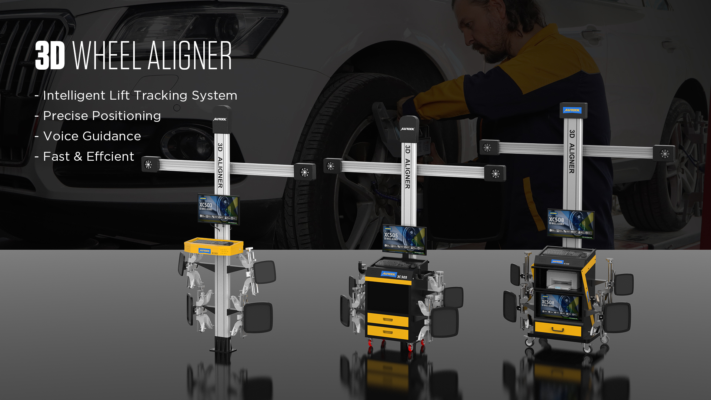
In the automotive repair industry, more workshops are emphasizing wheel alignment because precise alignment improves customer satisfaction and brings more consistent revenue. For fast, accurate, and efficient alignment work, both an alignment machine and a lift are required. Making these two pieces of equipment work as a coordinated ‘golden duo’ is a key concern for every shop owner and technician. This practical guide will walk you through the process step by step!
Why choose them together? Don’t buy the positioning device or lift separately.
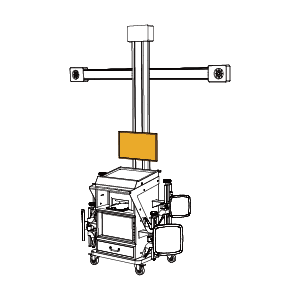
Simply put, a four-wheel alignment machine is a measuring tool, while a lift is a working platform.
To do professional wheel alignment in a repair shop, both the alignment machine and the vehicle lift must work together — one alone isn’t enough.
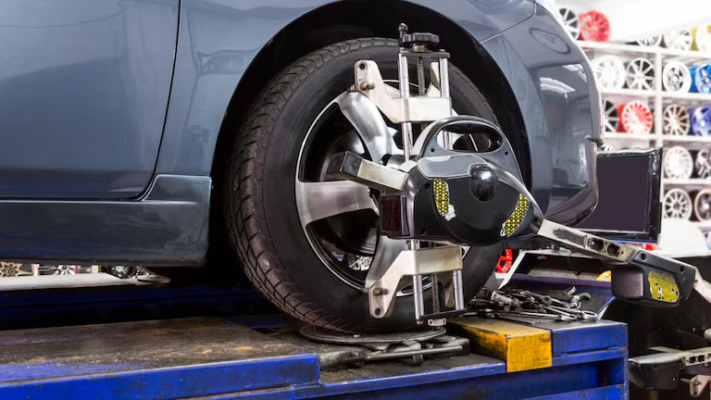
🔧 A wheel alignment machine by itself can measure wheel geometry and vehicle angles using sensors and software. It tells you what needs adjusting and how far off the alignment is. Accurate alignment improves handling, tire life, and fuel efficiency. But to measure properly, the wheels must be freely rotatable and unloaded, which usually requires lifting the vehicle off the ground.
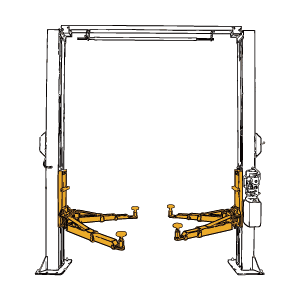
🚗 On the other hand, a lift alone — whether two-post, four-post, or scissor style — simply provides access underneath the vehicle. Without a dedicated alignment system, a lift doesn’t help you measure or correct wheel alignment angles. You’d still lack the diagnostic capability to perform precision alignment work.
Together, the lift raises the vehicle for access, and the alignment system collects accurate data for adjustments. This is why professional tire shops and repair bays combine the two as a single, integrated alignment bay.
Starting from the actual situation in the workshop: 4 core selection points
Workshop Space Considerations
When choosing equipment for your shop, the size of your workspace is a key factor in deciding which lift and alignment setup will work best.
If your shop has limited floor space, a scissor lift or low-profile drive-on lift is often a more space-efficient choice. These lifts use a folding mechanism that takes up less floor space, making them ideal for workshops where every square foot counts. When not in use, scissor lifts fold down low but still lift vehicles high enough for many routine alignment and light maintenance tasks.
Small Space
Recommended: Scissor Lift + Portable Wheel Alignment System
Advantages: Takes up less space, flexible and easy to position
Drawbacks: Lifting height and load capacity may be limited compared with larger lift types
On the other hand, if your workshop has ample space, a four-post lift becomes a compelling option. Four‑post lifts are stable and easy to drive onto, making them a popular choice for alignment bays and many vehicle types. These lifts typically take up more floor space due to the four columns and runway design, but they provide a solid, reliable platform for professional-level alignment work.
Large Space
Recommended: Four-Post Lift + Fully Automated Alignment System
Advantages: Supports a wider range of vehicles, very stable and easy to use
Drawbacks: Requires more floor area compared with scissor or two-post lifts
Vehicle Service Range
Are you primarily servicing small passenger cars or larger SUVs and light trucks? Different vehicles need different lifting heights and load capacities, so your lift must be rated for the types of vehicles you work on. Small cars are lighter and require less lifting height, while SUVs and light trucks are heavier and taller, needing lifts with higher capacity and reach. For example, many shops choose four‑post lifts with higher weight ratings because they can safely support heavier vehicles and handle a wider range of alignment and undercarriage work.
Accuracy and Feature Requirements for Alignment Machines
When choosing a wheel alignment machine, there are three key factors to consider:
✔ Measurement Accuracy – The higher the precision, the more accurate the alignment results, which helps reduce rework and improve service quality. High‑end systems use advanced sensor and imaging technology for more reliable data.
✔ Automatic Compensation Features – Built‑in compensation functions can reduce human error by automatically adjusting for minor setup differences or uneven surfaces, resulting in more consistent alignment results.
✔ Vehicle Database Coverage – A large and up‑to‑date vehicle data library allows the machine to support alignment specifications for a wider range of makes and models, making your service more versatile and adaptable.
📌 Note: The price of alignment machines can vary widely — from tens of thousands to hundreds of thousands of yuan (or equivalent) — depending on measurement precision, software features, database size, and additional functions.
Compatibility Between Lifts and Alignment Systems
Many high‑end alignment lifts are specifically designed with alignment work in mind. They often include features such as built‑in turntables, adjustable platform spacing, and slip plates, which help ensure that the wheel alignment machine can collect data in a more stable and reliable environment. These design elements make it easier to position the vehicle correctly and allow the alignment system’s sensors to work without interference.
For this reason, when selecting equipment, it’s wise to prioritize lifts that are compatible with your chosen alignment system and support alignment‑specific accessories. This can help you avoid headaches down the road — such as having to modify equipment or dealing with poor fitment that leads to inconsistent readings or downtime. Compatible lifts help ensure smoother integration, better data accuracy, and a more efficient workflow overall.
Scenario‑Based Equipment Recommendations
📌Option 1: Scissor Lift + Portable Wheel Alignment System
Advantages
- Space‑saving and highly flexible: Scissor lifts take up minimal floor space and can be installed even in compact workshops. Their folding platform design leaves no columns beneath the vehicle, making the workspace more open and easier to move around in.
- Lower cost: Scissor lifts are generally less expensive than traditional post‑style lifts, and portable alignment systems also require a smaller investment, making this combination ideal for budget‑conscious shops.
- Easy installation and mobility: These lifts usually do not require major foundation work, and some can even be relocated within the shop as needed.
Disadvantages
- Limited load capacity and lift height: The scissor design typically offers lower lifting height and lower capacity compared with post‑style lifts, making it less suitable for taller SUVs or heavier vehicles.
- Less stability at height: Compared with two‑post or four‑post lifts, scissor lifts may feel slightly less stable when raised, so extra care is needed to maintain vehicle balance.
- Portable alignment system limits: Portable alignment tools are more affordable, but they tend to offer lower precision, fewer software functions, and slower workflow than high‑end fully automated systems.
📌 Option 2: Two‑Post Lift + Fully Automated Wheel Alignment System
Why It’s a Cost‑Effective Choice
High overall efficiency: Two‑post lifts provide good lifting height and clear underbody access, creating a comfortable environment for alignment work.
Accurate, feature‑rich alignment: Fully automated alignment systems include automatic calibration, quick measurement, and extensive vehicle databases — significantly increasing alignment speed and precision.
Moderate price: Compared with a four‑post lift setup, this combination offers excellent performance at a more budget‑friendly level.
In practice, the simplicity of a two‑post lift’s design and its relatively easy installation help raise vehicles efficiently, while a fully automated alignment unit delivers fast, accurate alignment data — forming a “performance‑versus‑cost balanced” golden combination. ✔
✔ Two‑post lifts also don’t occupy large central floor areas, but you should still plan for proper foundation anchoring and installation conditions.
📌 Option 3: In‑Ground Scissor Lift + Wireless Wheel Alignment System
Maximizing Space Efficiency
In‑ground design saves space: The scissor lift mechanism is recessed below the floor, making the lift almost invisible when not in use and greatly improving workshop space utilization without obstructing movement.
Wireless alignment is more convenient: Wireless alignment systems eliminate cable clutter, reduce setup interference, and allow faster data capture and adjustments.
Perfect for refined workshop layouts: This combination suits professional shops that prioritize a clean, modern workspace and efficient layout.
Considerations / Drawbacks
Higher installation cost: In‑ground lifts require excavation, trenching, and waterproofing, meaning higher upfront installation expenses and more complex groundwork.
Wireless alignment systems are pricier: While their usability is better, fully wireless alignment systems generally cost more than basic wired models.
📌 Option 4: Cantilever / Articulated Platform + Light‑Duty Alignment Tools
Advantages for Special Vehicles
Great for non‑standard vehicles: For vehicles with irregular undercarriage geometry, very wide wheelbases, or those that struggle to fit into conventional lifts, a cantilever or articulating platform can raise specific vehicle areas by the side or selective focal points.
Light alignment tools offer flexibility: When paired with lightweight alignment devices, you can perform undercarriage inspections and minor alignment adjustments directly on the platform, enhancing adaptability for unique service scenarios.
⚠ Disadvantages
Limited precision and deep‑service capability: Light alignment tools generally do not match the accuracy and advanced features of fully automated systems, making them better suited for quick checks or supplemental services.
Not a mainstream primary alignment solution: This setup works best as a specialized solution for unique vehicles or specific alignment tasks rather than for frequent, high‑volume alignment work.
|
Solution |
Space Efficiency |
Cost |
Alignment Efficiency |
Work Flexibility |
Precision Capability |
|
Scissor + Portable Alignment |
⭐⭐⭐⭐ |
⭐⭐⭐⭐ |
⭐⭐⭐ |
⭐⭐⭐⭐ |
⭐⭐ |
|
Two‑Post + Fully Automated |
⭐⭐⭐ |
⭐⭐⭐ |
⭐⭐⭐⭐ |
⭐⭐⭐ |
⭐⭐⭐⭐ |
|
In‑Ground Scissor + Wireless |
⭐⭐⭐⭐⭐ |
⭐⭐ |
⭐⭐⭐⭐ |
⭐⭐⭐⭐ |
⭐⭐⭐ |
|
Cantilever Platform + Light Tools |
⭐⭐⭐ |
⭐⭐⭐ |
⭐⭐ |
⭐⭐⭐⭐ |
⭐⭐ |
Summary: Don’t Just Look at Price!
Don’t base your equipment choice for the shop solely on price. What matters more is whether the combination can:
Improve your work efficiency — helping you complete jobs faster and serve more customers.
Enhance alignment quality — delivering more accurate results and reducing rework.
Support your shop’s future growth — giving you room to expand services and handle a wider range of vehicles.
In the automotive repair industry, more workshops are emphasizing wheel alignment because precise alignment improves customer satisfaction and brings more consistent revenue. For fast, accurate, and efficient alignment work, both an alignment machine and a lift are required. Making these two pieces of equipment work as a coordinated ‘golden duo’ is a key concern for every shop owner and technician. This practical guide will walk you through the process step by step!
Why choose them together? Don’t buy the positioning device or lift separately.
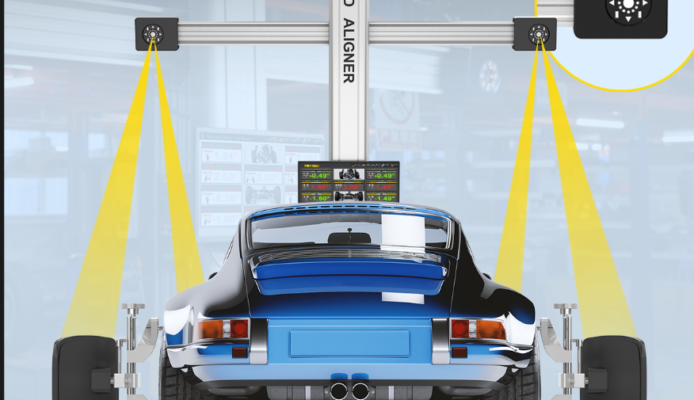
Simply put, a four-wheel alignment machine is a measuring tool, while a lift is a working platform.
To do professional wheel alignment in a repair shop, both the alignment machine and the vehicle lift must work together — one alone isn’t enough.
🔧 A wheel alignment machine by itself can measure wheel geometry and vehicle angles using sensors and software. It tells you what needs adjusting and how far off the alignment is. Accurate alignment improves handling, tire life, and fuel efficiency. But to measure properly, the wheels must be freely rotatable and unloaded, which usually requires lifting the vehicle off the ground.
🚗 On the other hand, a lift alone — whether two-post, four-post, or scissor style — simply provides access underneath the vehicle. Without a dedicated alignment system, a lift doesn’t help you measure or correct wheel alignment angles. You’d still lack the diagnostic capability to perform precision alignment work.
Together, the lift raises the vehicle for access, and the alignment system collects accurate data for adjustments. This is why professional tire shops and repair bays combine the two as a single, integrated alignment bay.
Starting from the actual situation in the workshop: 4 core selection points
Workshop Space Considerations
When choosing equipment for your shop, the size of your workspace is a key factor in deciding which lift and alignment setup will work best.
If your shop has limited floor space, a scissor lift or low-profile drive-on lift is often a more space-efficient choice. Scissor lifts have a folding design that takes up less floor space, making them great for workshops with limited room. When not in use, they fold down low but can still lift vehicles high enough for many routine alignment and light maintenance tasks.
Small Space
Recommended: Scissor Lift + Portable Wheel Alignment System
Advantages: Takes up less space, flexible and easy to position
Drawbacks: Lifting height and load capacity may be limited compared with larger lift types
On the other hand, if your workshop has ample space, a four-post lift becomes a compelling option. Four‑post lifts are stable and easy to drive onto, making them a popular choice for alignment bays and many vehicle types. These lifts typically take up more floor space due to the four columns and runway design, but they provide a solid, reliable platform for professional-level alignment work.
Large Space
Recommended: Four-Post Lift + Fully Automated Alignment System
Advantages: Supports a wider range of vehicles, very stable and easy to use
Drawbacks: Requires more floor area compared with scissor or two-post lifts
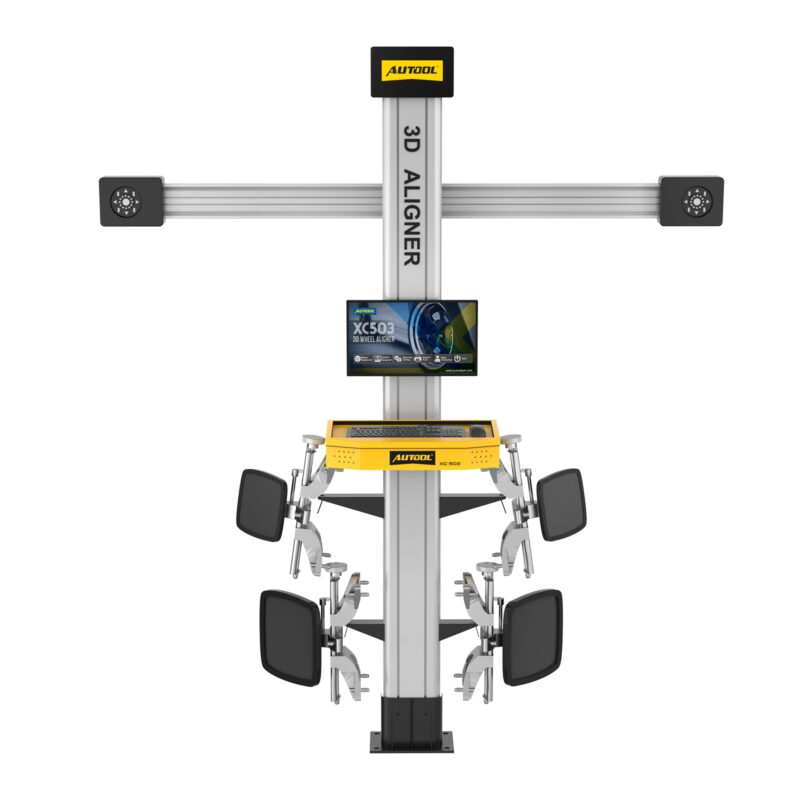
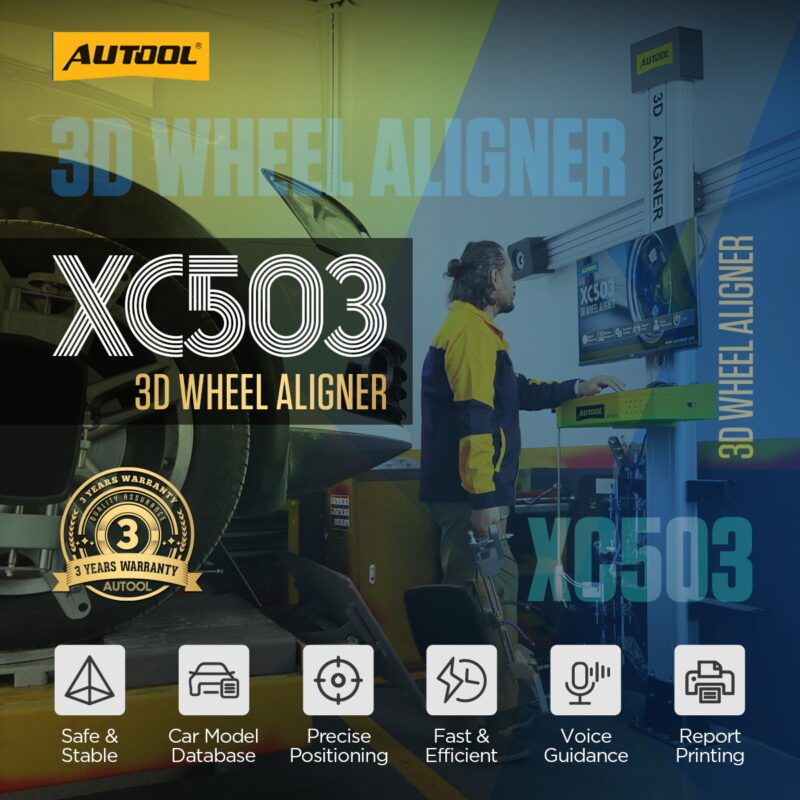
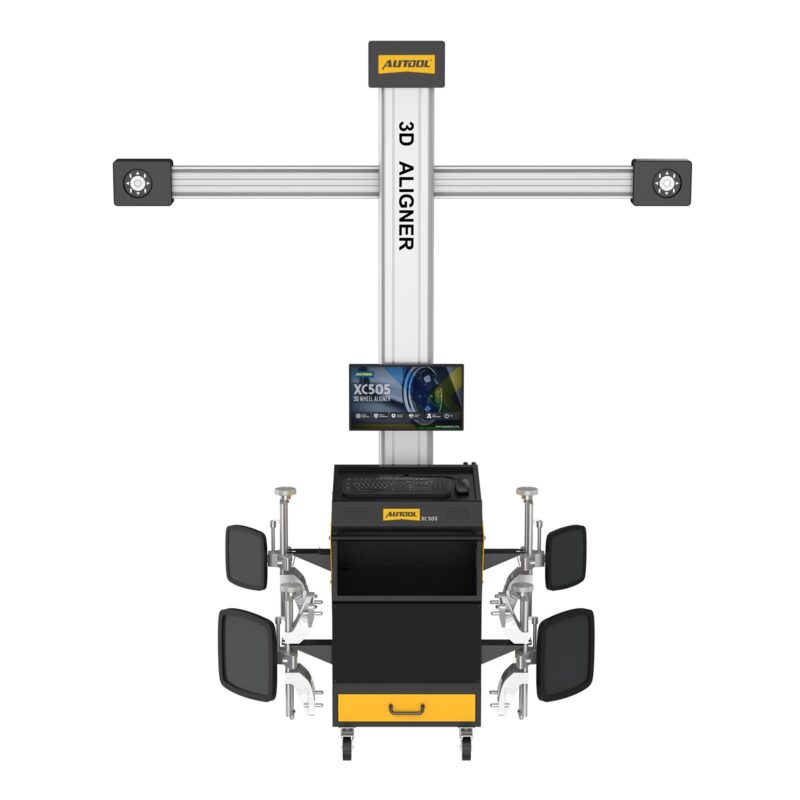
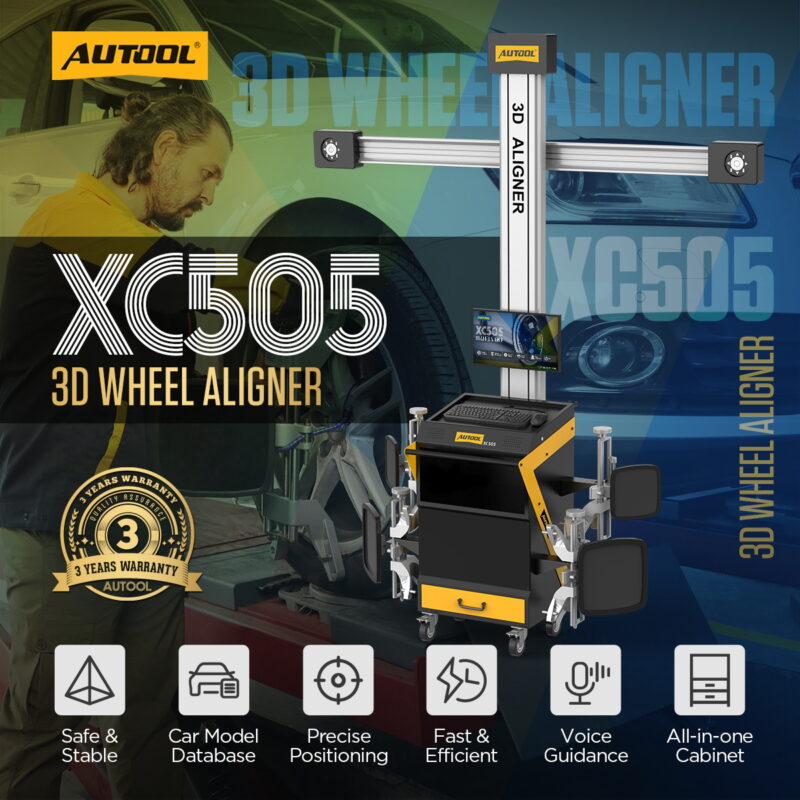
-13%
HOT
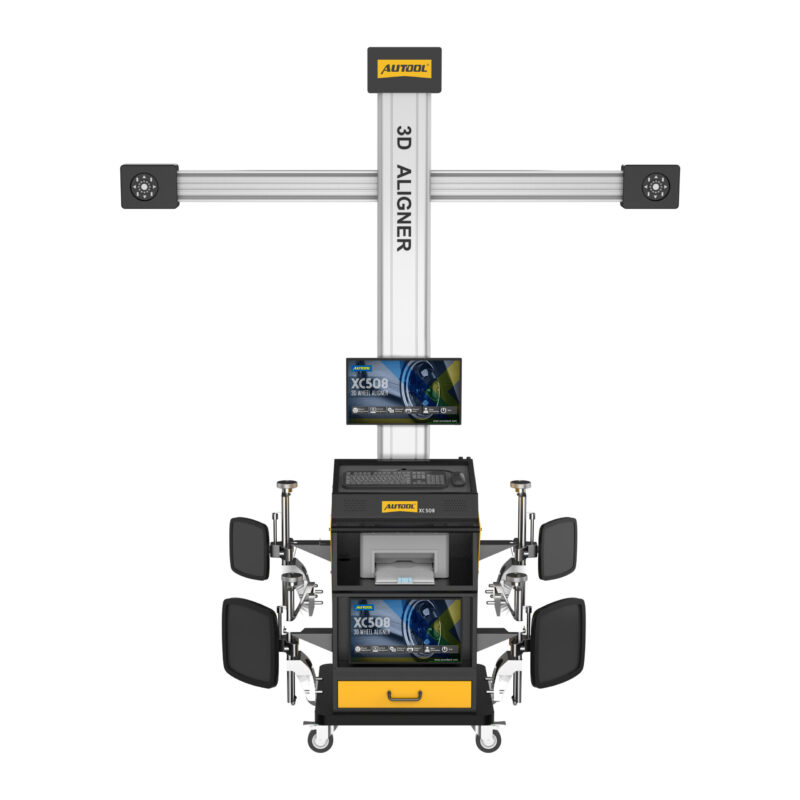
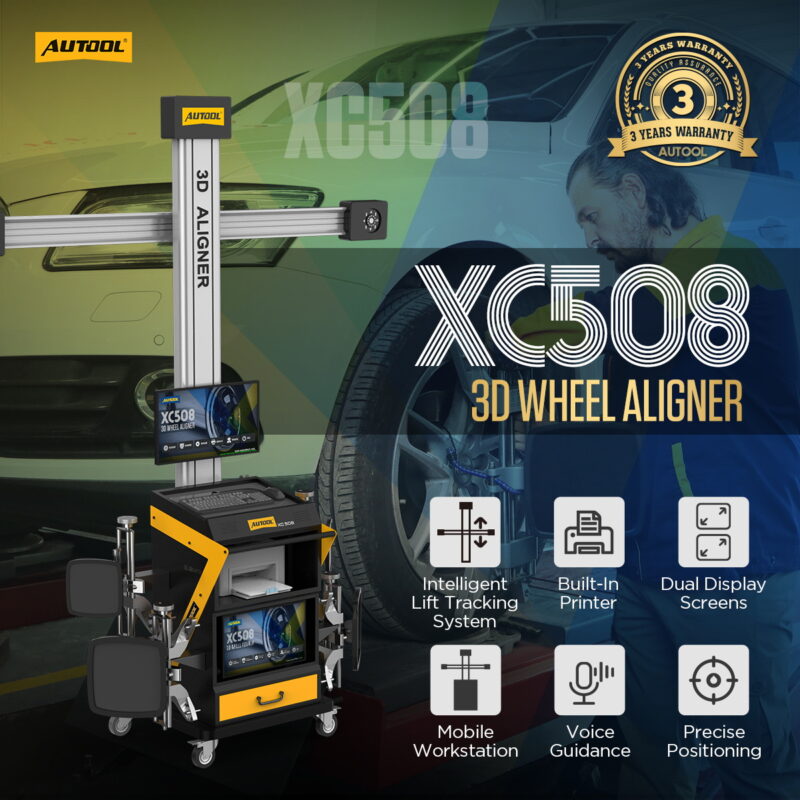
Original price was: €6911.14.€6047.14Current price is: €6047.14.
€155.52 – €690.34
Vehicle Service Range
Are you primarily servicing small passenger cars or larger SUVs and light trucks? Different vehicles need different lifting heights and load capacities, so your lift must be rated for the types of vehicles you work on. Small cars are lighter and require less lifting height, while SUVs and light trucks are heavier and taller, needing lifts with higher capacity and reach. For example, many shops choose four‑post lifts with higher weight ratings because they can safely support heavier vehicles and handle a wider range of alignment and undercarriage work.
Accuracy and Feature Requirements for Alignment Machines
When choosing a wheel alignment machine, there are three key factors to consider:
✔ Measurement Accuracy – The higher the precision, the more accurate the alignment results, which helps reduce rework and improve service quality. High‑end systems use advanced sensor and imaging technology for more reliable data.
✔ Automatic Compensation Features – Built‑in compensation functions can reduce human error by automatically adjusting for minor setup differences or uneven surfaces, resulting in more consistent alignment results.
✔ Vehicle Database Coverage – A large and up‑to‑date vehicle data library allows the machine to support alignment specifications for a wider range of makes and models, making your service more versatile and adaptable.
📌 Note: The price of alignment machines can vary widely — from tens of thousands to hundreds of thousands of yuan (or equivalent) — depending on measurement precision, software features, database size, and additional functions.
Compatibility Between Lifts and Alignment Systems
Many high‑end alignment lifts are specifically designed with alignment work in mind. They often include features such as built‑in turntables, adjustable platform spacing, and slip plates, which help ensure that the wheel alignment machine can collect data in a more stable and reliable environment. These design elements make it easier to position the vehicle correctly and allow the alignment system’s sensors to work without interference.
For this reason, when selecting equipment, it’s wise to prioritize lifts that are compatible with your chosen alignment system and support alignment‑specific accessories. This can help you avoid headaches down the road — such as having to modify equipment or dealing with poor fitment that leads to inconsistent readings or downtime. Compatible lifts help ensure smoother integration, better data accuracy, and a more efficient workflow overall.
Want to learn more? Contact us to enjoy a 10% discount for new customers and 3-year warranty!
- WhatsApp: +86 189 2647 7404
- Email: shop@autooltech.com
 Home
Home Shopping Guide
 Product
 Wheel Aligner Machine
 Smoke Leak Detector
 Fuel Injector Tester
 Brake Fluid Exchanger
 Dry lce Blasting Machine
 Walnut Sand De-Carbon Cleaner
 Refrigerant Recovery Machine
 Articulating Borescope
 Transmission Fluid Exchanger
 Spark Plug Tester
 Battery System Tester
 Engine Pressure Tester
 Diagnostic Multimeter
 Key Frequency Tester
 Maintenance Environment Tester
 Pneumatic Oil Drainer & Extractor
 Oil Analysis Tester
 Circuit Tester
 OBD Diagnostic Tool
 Digital Manifold Gauge
 Inverter Programming Power Supply
 EV Charging
 Used Car Diagnostic Tester
 Cooling System Tester and Filler
 Workshop Tool Storage Series
 EV Battery Pack Air Tightness Tester
 Wheel Alignment Machines
 ACCESSORIES&OTHER
 News
News Help Center
 Custom Solutions (OEM & ODM)
 Track My Order
 Online Support