



























Uncategorized
What Car Refrigerant Types Are You Using in 2026?

Introduction
As environmental regulations continue to tighten, the automotive industry continues to introduce new car refrigerant types. From the early R12 to the widely used R134a and R1234yf today, each refrigerant for car AC offers different environmental performance, cooling efficiency, and service requirements.
So, which car refrigerant types do drivers use today? What are the differences between them? Can you mix them? This article provides a detailed overview.
I. What Are The Car Refrigerant Types?
Historically, automotive air conditioning refrigerants can be broadly categorized as follows:
R12 (CFC-12): The earliest and most widely used, but environmentally harmful
R12 was the first refrigerant to be widely used in automotive air conditioning systems.
It offered excellent cooling performance and stability, leading to its widespread use in the 1980s and early 1990s.
However, subsequent research revealed that R12 depletes the ozone layer, causing serious environmental damage. As a result, many countries and regions have banned the production and use of R12.
Currently, only a very small number of vintage and classic cars still use this refrigerant.
R134a (HFC-134a): An Environmentally Friendly Alternative to R12
R134a is one of the most successful replacements for R12.
Since 1994, most automakers have adopted R134a as the standard refrigerant.
Its advantages include:
• Stable cooling performance
• Relatively low cost
• Well-established service equipment
• Ample global supply
Even today, a large number of vehicles worldwide still use R134a air conditioning systems.
R1234yf: A New Generation of Environmentally Friendly Refrigerants
As environmental regulations become increasingly stringent, R1234yf is gradually emerging as the next-generation automotive refrigerant.
Compared to R134a, R1234yf’s greatest advantage is its extremely low global warming potential (GWP), making it more environmentally friendly.
Currently, new vehicle models produced in Europe, North America, and many Asian countries have begun to widely adopt R1234yf.
In the coming years, R1234yf is likely to become the mainstream refrigerant in the automotive air conditioning industry.
R744 (Carbon Dioxide Refrigerant): Limited Use
R744 is actually carbon dioxide (CO₂).
In recent years, some new energy vehicles and high-end models have begun adopting CO₂ air conditioning systems.
It offers the following advantages:
• Excellent environmental performance
• Does not deplete the ozone layer
• Extremely low greenhouse gas potential
However, its operating pressure is significantly higher than that of traditional air conditioning systems, resulting in higher requirements for equipment and maintenance expertise; as a result, it has not yet been widely adopted.
II. What Are the Most Common Automotive Refrigerants?
For vehicles currently on the market, there are two main types of refrigerants:
R134a
If your vehicle was manufactured between 1995 and 2020, it most likely uses R134a.
This refrigerant for car AC features mature technology and low maintenance costs, making it still the most widely used automotive refrigerant globally.
R1234yf
New vehicles produced in recent years are increasingly using R1234yf.
Particularly in the European and American markets, due to environmental regulations, new models have largely begun transitioning to R1234yf.
For repair shops, having the capability to test for both R134a and R1234yf has become essential.
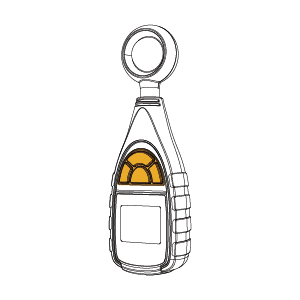
For example, the AUTOOL LM708 can test for both refrigerants simultaneously.
III. Can Refrigerants Be Mixed?
The answer is: It is absolutely not recommended.
Different types of refrigerants have different chemical properties, operating pressures, and lubricant requirements.
Mixing them may result in:
• Reduced cooling efficiency
• Compressor lubrication failure
• Corrosion inside the air conditioning system
• Abnormal pressure spikes
• Damage to service equipment
For example, although R134a and R1234yf appear to have similar performance characteristics, their system designs, connection standards, and lubricant requirements are not the same.
Mixing them not only affects cooling performance but may also cause the entire air conditioning system to fail.
Therefore, before refilling refrigerant, you must first confirm the type of refrigerant specified by the vehicle manufacturer.
IV. How Can I Find Out What Car Refrigerant Types ?
If you’re unsure which refrigerant your vehicle uses, you can confirm it in the following ways:
Check the label in the engine compartment
Most cars have an air conditioning system label affixed inside the engine compartment.
The label typically specifies:
• Refrigerant type
• Refrigerant charge
• Compressor oil specification
This is the simplest and most accurate method.
Check the Vehicle Owner’s Manual
The vehicle owner’s manual usually provides detailed information on the refrigerant type used in the air conditioning system and maintenance requirements.
Look Up VIN Information
For some car brands, you can look up vehicle specifications and refrigerant for car AC information using the Vehicle Identification Number (VIN).
Use Professional Testing Equipment
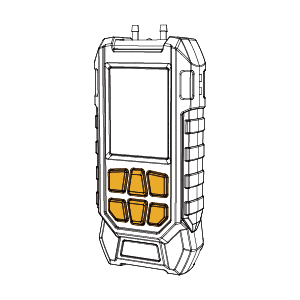
Professional repair shops can use refrigerant analyzers or digital refrigerant gauges to measure system operating parameters, which helps determine the type of refrigerant.
V. When Should the Refrigerant Be Replaced?
Theoretically, different car refrigerant types operate in a closed-loop system, so they do not have a fixed replacement cycle. If the system has no leaks, the refrigerant can last for many years.
However, you should promptly inspect or recharge there frigerant for car AC when the following situations occur:
Significant decrease in cooling performance
If the temperature at the air vents rises noticeably, it may indicate insufficient refrigerant.
Frequent cycling of the air conditioning compressor
Abnormal refrigerant pressure can cause the compressor’s protection mechanism to activate frequently.
Repairs for System Leaks
After replacing the condenser, evaporator, compressor, or piping, it is usually necessary to evacuate the system and recharge it with refrigerant.
Major Overhaul of the Air Conditioning System
After major repairs, it is recommended to recharge the system with new, standard-compliant refrigerant to ensure system performance.
During the repair process, using a digital refrigerant gauge allows for real-time monitoring of high- and low-pressure changes, verification of vacuum status, and analysis of superheat and subcooling, thereby ensuring more accurate refrigerant charging.
Summary
Car refrigerant types have evolved from R12 and R134a to R1234yf, and CO₂ refrigerants will likely gain wider adoption in the future. At present, R134a and R1234yf remain the most common car refrigerant types on the market.
It is important not to mix different refrigerants arbitrarily, as doing so may damage the air conditioning system and increase repair costs. Before you refill or replace the refrigerant, make sure you confirm the refrigerant type recommended by your vehicle manufacturer.
In our next blog post, we’ll explain how to replace your car refrigerant.
 Home
Home Shopping Guide
 Product
 Wheel Aligner Machine
 Smoke Leak Detector
 Fuel Injector Tester
 Brake Fluid Exchanger
 Dry lce Blasting Machine
 Walnut Sand De-Carbon Cleaner
 Refrigerant Recovery Machine
 Articulating Borescope
 Transmission Fluid Exchanger
 Spark Plug Tester
 Battery System Tester
 Engine Pressure Tester
 Diagnostic Multimeter
 Key Frequency Tester
 Maintenance Environment Tester
 Pneumatic Oil Drainer & Extractor
 Oil Analysis Tester
 Circuit Tester
 OBD Diagnostic Tool
 Digital Manifold Gauge
 Inverter Programming Power Supply
 EV Charging
 Used Car Diagnostic Tester
 Cooling System Tester and Filler
 Workshop Tool Storage Series
 EV Battery Pack Air Tightness Tester
 Wheel Alignment Machines
 ACCESSORIES&OTHER
 News
News Help Center
 Custom Solutions (OEM & ODM)
 Track My Order
 Online Support