








Product Presentation, Uncategorized
Tire Changer 101: Understanding the Mechanism Behind the Machine
A tire changer, also known as a tire swapper or tire mounting/removing machine, is a common tool in automotive repair, specifically designed for removing tires. It’s very convenient for tire removal. So, what kinds of tire changers are available on the market? Below, we’ll discuss the working principle, structure, performance characteristics, classification, selection tips, and maintenance of tire changers to hopefully answer your questions.
Working principle of the tire-changing machine
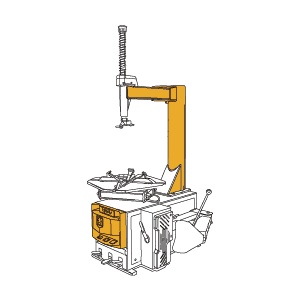
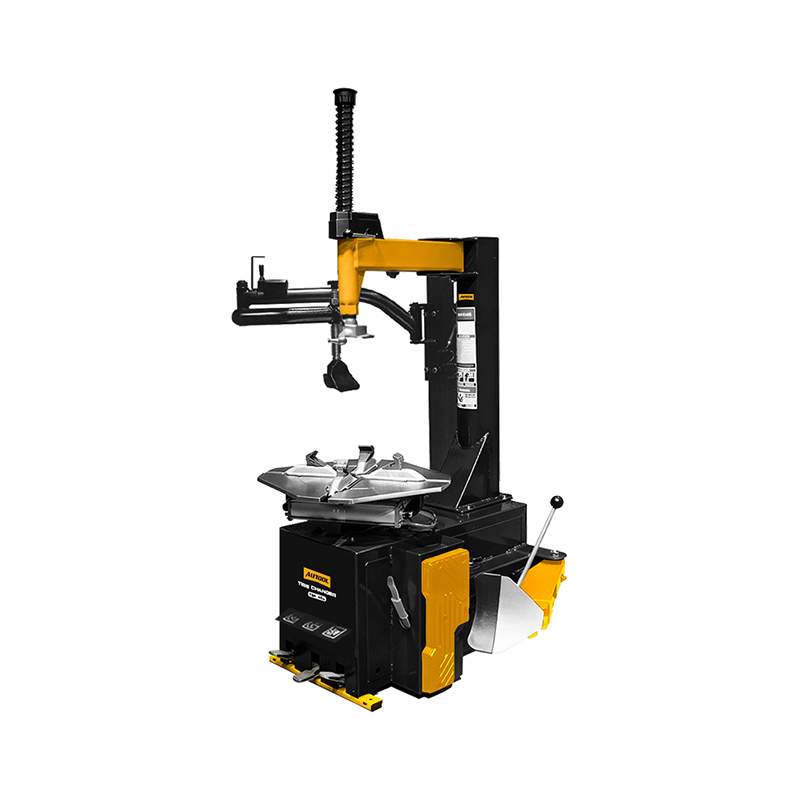
The tire changer’s function is to remove and install tires. It mainly consists of a frame, pressure plate, pressure cylinder, support cylinder, traveling trolley, and hydraulic system. Two auxiliary cylinders are parallel to each other on either side of the central cylinder. The pressure plate connects perpendicularly to the central cylinder, while the two auxiliary cylinders connect perpendicularly to the hook slide. The hook slide contains hook tracks. The hydraulic system controls the interaction between the pressure plate and the hook slide to complete the tire removal operation.
The tire changer is highly efficient, adaptable, and does not damage the tire during the removal process. It serves metallurgical, chemical, coal mining, and water conservancy industries by removing large vehicle tires and rims.

1. Main Workbench: This platform places and rotates the tires for removal.
2. Tire Separation Arm: This arm separates the tire from the rim, making removal easier.
3. Inflation/Deflation Device: This device releases air from the tire to facilitate inflation or removal. It also includes a tire pressure gauge. Typical tires have a pressure of around 2.2 atmospheres (approximately 0.2 MPa).
4. Foot Pedals: Three foot pedal switches are located at the bottom of the tire changer. Their functions are: clockwise/counterclockwise rotation to release the clamping switch, and rim/tire separation switch.
5. Lubricant: This helps with tire removal and installation, reduces damage during the process, and ensures a smoother tire removal and installation process.
6. Compressed Air Inlet
Performance characteristics of a tire changer
1. The tire changer features a wide-range moving gripper that tightens rims in vehicle modification shops and lifts tires with ease.
2. It has dual-sided mechanical pneumatic auxiliary arms, suitable for various operating methods, and is simple and quick to operate.
3. The working disc can be selected with dual speeds of 7-14 rpm to improve work efficiency.
4. It adopts a pneumatic tilting column design and a push-pull pneumatic automatic locking design.
5. A simple and effective top-inflation device solves the problem of tire inflation difficulties; it is flexible and mobile, can be used with other machines, or can be separated, making it suitable for various tire shops.
Tire changer classification:
1. According to the type of power, tire changers can be divided into two categories: pneumatic tire changers and hydraulic tire changers.
2. According to the type of use, they can be divided into four categories: motorcycle tire changers, construction vehicle tire changers, passenger car tire changers, and truck tire changers.
Tips for choosing a tire changer
1. Housing Structure:
The housing structure completely affects the performance and safety of the tire changer. If the steel plate used for the housing is too thin or the internal bracing structure is unreasonable, the tire changer will be damaged. Therefore, when selecting a tire changer, you should open the side cover of the housing and observe the internal structure. A standard housing should have bracing on both the top and bottom. A simple way to check its quality is by looking at the weight. Careful selection is essential to ensure the equipment will not deform under stress during later use.
2. Motor The power of a motor is generally above 1000W (380V)
Some manufacturers use motors around 800W to reduce costs, but their operational stability is much worse. When purchasing, you can remove the side cover to check the rated power of the motor. The motor should operate with low noise and no obvious vibration, and copper-clad wire should be selected.
3. Gearbox
The gearbox is the reduction device that transmits power in a tire changer. Gearboxes are usually made of special materials or alloys. During transmission, they need to have low noise, good balance, and small clearances. Some small tire changer manufacturers use inferior hard alloy casting gearboxes, which are noisy during operation and have excessive clearances when swaying left and right, affecting normal tire installation and removal, and easily causing scratches on the rims or tires.
4. Large Air Cylinder:
Choose a high-strength aluminum air cylinder. Major manufacturers use cylinders with an inner diameter of 186 or 200 mm and a support lug distance of 70-90 mm. The piston is made entirely of aluminum, with two sealing rubber rings and one sealing ring. High-quality products use aluminum pistons to ensure the tire-changing machine’s tire-scraping pressure and cylinder lifespan. The tire-scraping pressure is 2500 kg. For mid-to-high-end machines, a quick-release valve can be selected to increase tire-scraping speed!
5. Gas distribution valve:
Aluminum or high-strength nylon products should be selected. The joint should use a locking connector to lock the gas pipe. Many small manufacturers use inferior gas distribution valves and plastic quick-connect connectors to save costs. This can lead to pipe bursts and leaks when the gas source pressure is too high, and the service life is short.
6. Small cylinder:
The internal piston must be a high-strength, wear-resistant aluminum piston. Many small manufacturers use plastic or nylon products, which seriously affects the service life. The valves that are distributed from the small cylinder should also be selected with locking structure joints.
7. Wheel hub installation and removal:
A curved design is preferable, as it is less prone to deformation after years of use, ensures smooth tire installation and removal, and protects the rims, tires, and hubs from damage. Inferior wheel hubs have poorly designed curved shapes that can easily scratch the rims and tires, causing unnecessary losses to auto repair shops or tire stores.
 $1435.00 – $1615.00
$870.00 – $1187.00
-13%
HOT
Original price was: $7999.00.$6999.00Current price is: $6999.00.
$1435.00 – $1615.00
$870.00 – $1187.00
-13%
HOT
Original price was: $7999.00.$6999.00Current price is: $6999.00.
FAQ About Tire Changers
What is the best type of tire changer?
The best type of tire changer depends on the workload and type of wheels you service. Swing-arm tire changers are a cost-effective choice for small workshops and general tire service. Tilt-back tire changers provide more working space and are easier to operate when handling larger wheels. For high-volume shops or vehicles with low-profile and run-flat tires, leverless or touchless tire changers offer the safest and most efficient solution because they minimize the risk of rim damage.
How do I choose the right tire changer size?
When selecting a tire changer, consider the largest wheel diameter you plan to service. A machine with a 24-inch clamping range is typically suitable for wheels up to about 22 inches. However, many modern vehicles use larger wheels, so workshops often choose tire changers with a 26–28 inch clamping capacity to ensure better compatibility with SUVs, trucks, and performance vehicles.
How can I prevent damaging wheels during tire changes?
Wheel damage usually occurs when improper tools or techniques are used. To protect rims, technicians should use plastic jaw protectors, mount head inserts, and proper lubrication on the tire bead and rim. Modern tire changers with assist arms and rim-protection components also help reduce the risk of scratches, especially when working with alloy or painted wheels.
What features should I look for in a tire changer?
Several features can make a tire changer more efficient and easier to operate. An assist arm helps handle stiff sidewalls and low-profile tires. A powerful bead breaker makes it easier to separate the tire bead from the rim, especially on older tires. For busy workshops, a faster turntable speed can also improve productivity by reducing the time needed for each tire change.
What maintenance does a tire changer require?
Regular maintenance helps keep a tire changer operating safely and reliably. Technicians should drain moisture from the air filter and regulator, lubricate moving parts, and inspect the pneumatic or hydraulic systems for leaks. Keeping the machine clean and checking protective components such as clamps and plastic guards will also extend the service life of the equipment.
Safety Tips for Operating a Tire Changer
Proper safety practices are essential when using tire service equipment.
-
Always wear safety glasses and protective gear during operation.
-
Never lean over a tire while inflating it.
-
Inspect the wheel and tire for damage before mounting.
-
Apply proper lubrication to the bead and rim to reduce mounting resistance.
-
Follow the manufacturer’s recommended air pressure limits.
Tire changer maintenance
1. Before performing maintenance, disconnect the power and air supply.
2. After each day’s work, thoroughly wipe the machine clean and regularly lubricate all sliding and moving parts.
3. Regularly check the air-water separator and oil mist lubricator. Drain excess water promptly and replenish oil as needed.
4. Ensure the gearbox has sufficient lubricating oil; the oil level is visible through the oil window. Open the plastic cover in the center of the worktable, unscrew the bolt, and add oil through the bolt hole.
Contact us for more information and to get a 20% discount.
WhatsApp: +86 189 2647 7404
Email: shop@autooltech.com
A tire changer, also known as a tire swapper or tire mounting/removing machine, is a common tool in automotive repair, specifically designed for removing tires. It’s very convenient for tire removal. So, what kinds of tire changers are available on the market? Below, we’ll discuss the working principle, structure, performance characteristics, classification, selection tips, and maintenance of tire changers to hopefully answer your questions.
Working principle of the tire-changing machine
The tire changer’s function is to remove and install tires. It mainly consists of a frame, pressure plate, pressure cylinder, support cylinder, traveling trolley, and hydraulic system. Two auxiliary cylinders are parallel to each other on either side of the central cylinder. The pressure plate connects perpendicularly to the central cylinder, while the two auxiliary cylinders connect perpendicularly to the hook slide. The hook slide contains hook tracks. The hydraulic system controls the interaction between the pressure plate and the hook slide to complete the tire removal operation.
The tire changer is highly efficient, adaptable, and does not damage the tire during the removal process. It serves metallurgical, chemical, coal mining, and water conservancy industries by removing large vehicle tires and rims.
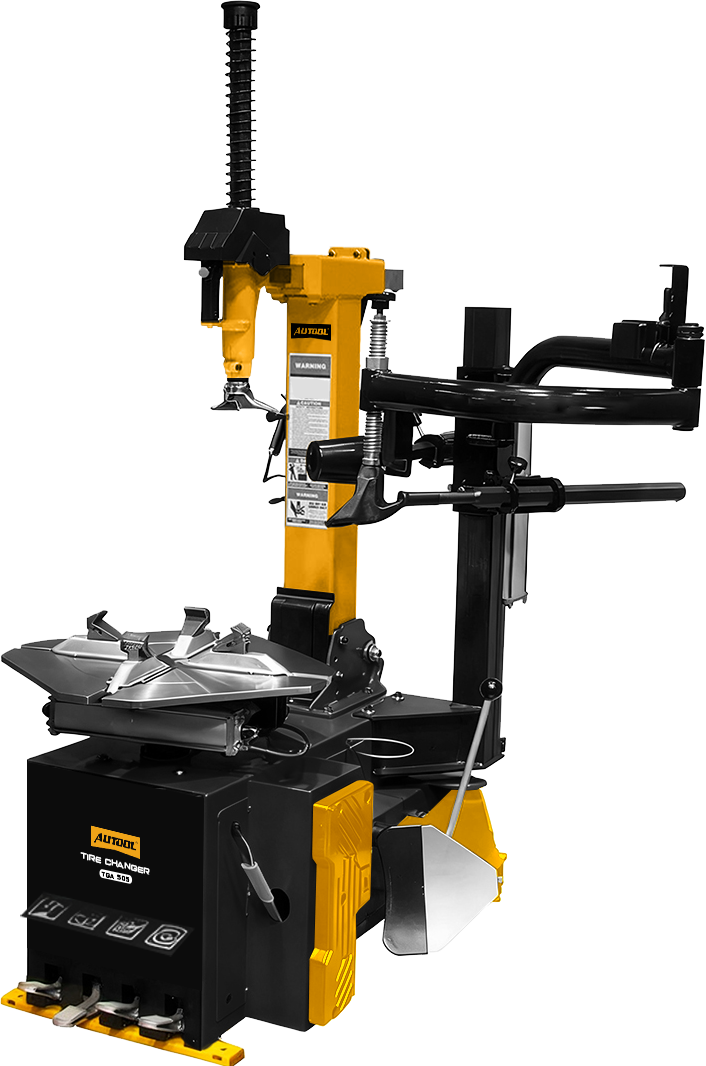
1. Main Workbench: This platform places and rotates the tires for removal.
2. Tire Separation Arm: This arm separates the tire from the rim, making removal easier.
3. Inflation/Deflation Device: This device releases air from the tire to facilitate inflation or removal. It also includes a tire pressure gauge. Typical tires have a pressure of around 2.2 atmospheres (approximately 0.2 MPa).
4. Foot Pedals: Three foot pedal switches are located at the bottom of the tire changer. Their functions are: clockwise/counterclockwise rotation to release the clamping switch, and rim/tire separation switch.
5. Lubricant: This helps with tire removal and installation, reduces damage during the process, and ensures a smoother tire removal and installation process.
6. Compressed Air Inlet
Performance characteristics of a tire changer
1. The tire changer features a wide-range moving gripper that tightens rims in vehicle modification shops and lifts tires with ease.
2. It has dual-sided mechanical pneumatic auxiliary arms, suitable for various operating methods, and is simple and quick to operate.
3. The working disc can be selected with dual speeds of 7-14 rpm to improve work efficiency.
4. It adopts a pneumatic tilting column design and a push-pull pneumatic automatic locking design.
5. A simple and effective top-inflation device solves the problem of tire inflation difficulties; it is flexible and mobile, can be used with other machines, or can be separated, making it suitable for various tire shops.
Tire changer classification:
1. According to the type of power, tire changers can be divided into two categories: pneumatic tire changers and hydraulic tire changers.
2. According to the type of use, they can be divided into four categories: motorcycle tire changers, construction vehicle tire changers, passenger car tire changers, and truck tire changers.
Tips for choosing a tire changer
1. Housing Structure:
The housing structure completely affects the performance and safety of the tire changer. If the steel plate used for the housing is too thin or the internal bracing structure is unreasonable, the tire changer will be damaged. Therefore, when selecting a tire changer, you should open the side cover of the housing and observe the internal structure. A standard housing should have bracing on both the top and bottom. A simple way to check its quality is by looking at the weight. Careful selection is essential to ensure the equipment will not deform under stress during later use.
2. Motor The power of a motor is generally above 1000W (380V)
Some manufacturers use motors around 800W to reduce costs, but their operational stability is much worse. When purchasing, you can remove the side cover to check the rated power of the motor. The motor should operate with low noise and no obvious vibration, and copper-clad wire should be selected.
3. Gearbox
The gearbox is the reduction device that transmits power in a tire changer. Gearboxes are usually made of special materials or alloys. During transmission, they need to have low noise, good balance, and small clearances. Some small tire changer manufacturers use inferior hard alloy casting gearboxes, which are noisy during operation and have excessive clearances when swaying left and right, affecting normal tire installation and removal, and easily causing scratches on the rims or tires.
4. Large Air Cylinder:
Choose a high-strength aluminum air cylinder. Major manufacturers use cylinders with an inner diameter of 186 or 200 mm and a support lug distance of 70-90 mm. The piston is made entirely of aluminum, with two sealing rubber rings and one sealing ring. High-quality products use aluminum pistons to ensure the tire-changing machine’s tire-scraping pressure and cylinder lifespan. The tire-scraping pressure is 2500 kg. For mid-to-high-end machines, a quick-release valve can be selected to increase tire-scraping speed!
5. Gas distribution valve:
Aluminum or high-strength nylon products should be selected. The joint should use a locking connector to lock the gas pipe. Many small manufacturers use inferior gas distribution valves and plastic quick-connect connectors to save costs. This can lead to pipe bursts and leaks when the gas source pressure is too high, and the service life is short.
6. Small cylinder:
The internal piston must be a high-strength, wear-resistant aluminum piston. Many small manufacturers use plastic or nylon products, which seriously affects the service life. The valves that are distributed from the small cylinder should also be selected with locking structure joints.
7. Wheel hub installation and removal:
A curved design is preferable, as it is less prone to deformation after years of use, ensures smooth tire installation and removal, and protects the rims, tires, and hubs from damage. Inferior wheel hubs have poorly designed curved shapes that can easily scratch the rims and tires, causing unnecessary losses to auto repair shops or tire stores.
$1435.00 – $1615.00
$870.00 – $1187.00
-13%
HOT
Original price was: $7999.00.$6999.00Current price is: $6999.00.
FAQ About Tire Changers
What is the best type of tire changer?
The best type of tire changer depends on the workload and type of wheels you service. Swing-arm tire changers are a cost-effective choice for small workshops and general tire service. Tilt-back tire changers provide more working space and are easier to operate when handling larger wheels. For high-volume shops or vehicles with low-profile and run-flat tires, leverless or touchless tire changers offer the safest and most efficient solution because they minimize the risk of rim damage.
How do I choose the right tire changer size?
When selecting a tire changer, consider the largest wheel diameter you plan to service. A machine with a 24-inch clamping range is typically suitable for wheels up to about 22 inches. However, many modern vehicles use larger wheels, so workshops often choose tire changers with a 26–28 inch clamping capacity to ensure better compatibility with SUVs, trucks, and performance vehicles.
How can I prevent damaging wheels during tire changes?
Wheel damage usually occurs when improper tools or techniques are used. To protect rims, technicians should use plastic jaw protectors, mount head inserts, and proper lubrication on the tire bead and rim. Modern tire changers with assist arms and rim-protection components also help reduce the risk of scratches, especially when working with alloy or painted wheels.
What features should I look for in a tire changer?
Several features can make a tire changer more efficient and easier to operate. An assist arm helps handle stiff sidewalls and low-profile tires. A powerful bead breaker makes it easier to separate the tire bead from the rim, especially on older tires. For busy workshops, a faster turntable speed can also improve productivity by reducing the time needed for each tire change.
What maintenance does a tire changer require?
Regular maintenance helps keep a tire changer operating safely and reliably. Technicians should drain moisture from the air filter and regulator, lubricate moving parts, and inspect the pneumatic or hydraulic systems for leaks. Keeping the machine clean and checking protective components such as clamps and plastic guards will also extend the service life of the equipment.
Safety Tips for Operating a Tire Changer
Proper safety practices are essential when using tire service equipment.
-
Always wear safety glasses and protective gear during operation.
-
Never lean over a tire while inflating it.
-
Inspect the wheel and tire for damage before mounting.
-
Apply proper lubrication to the bead and rim to reduce mounting resistance.
-
Follow the manufacturer’s recommended air pressure limits.
Tire changer maintenance
1. Before performing maintenance, disconnect the power and air supply.
2. After each day’s work, thoroughly wipe the machine clean and regularly lubricate all sliding and moving parts.
3. Regularly check the air-water separator and oil mist lubricator. Drain excess water promptly and replenish oil as needed.
4. Ensure the gearbox has sufficient lubricating oil; the oil level is visible through the oil window. Open the plastic cover in the center of the worktable, unscrew the bolt, and add oil through the bolt hole.
Contact us for more information and to get a 20% discount.
WhatsApp: +86 189 2647 7404
Email: shop@autooltech.com
 Home
Home Shopping Guide
 Product
 Wheel Aligner Machine
 Smoke Leak Detector
 Fuel Injector Tester
 Brake Fluid Exchanger
 Dry lce Blasting Machine
 Walnut Sand De-Carbon Cleaner
 Refrigerant Recovery Machine
 Articulating Borescope
 Transmission Fluid Exchanger
 Spark Plug Tester
 Battery System Tester
 Engine Pressure Tester
 Diagnostic Multimeter
 Key Frequency Tester
 Maintenance Environment Tester
 Pneumatic Oil Drainer & Extractor
 Oil Analysis Tester
 Circuit Tester
 OBD Diagnostic Tool
 Digital Manifold Gauge
 Inverter Programming Power Supply
 EV Charging
 Used Car Diagnostic Tester
 Cooling System Tester and Filler
 Workshop Tool Storage Series
 EV Battery Pack Air Tightness Tester
 Wheel Alignment Machines
 ACCESSORIES&OTHER
 News
News Help Center
 Custom Solutions (OEM & ODM)
 Track My Order
 Online Support