


AUTOOL Blog, Purchase Guides
5 Key Points for Selecting the Right Wheel Alignment Machine
Currently, wheel alignment machines on the market span a wide price range. From entry-level devices to professional systems, configurations and costs vary significantly.
However, in practical operation, the truly suitable wheel alignment machine for repair shops isn’t necessarily the “cheapest” or the one with the “most features.” Instead, it’s the equipment that consistently reduces operational costs and enhances efficiency over the long term. The following five key points represent the most critical factors auto repair shops should evaluate when selecting a wheel alignment machine.
1. Does the vehicle database cover mainstream European and American models?
The usability of a wheel alignment machine fundamentally depends on its database.
The actual vehicle model structure faced by auto repair shops
Unlike single-market operations, large repair shops typically handle:
- American brands: Ford, GM, Chrysler
- German brands: BMW, Mercedes-Benz, Audi
- European brands: Volkswagen, Volvo, Peugeot, Renault
- Plus models spanning different model years and chassis variants
Incomplete database coverage leads to alignment issues such as:
- Inability to match specific vehicle parameters
- Forced reliance on “generic values”
- Requiring manual research or skipping certain models
This directly impacts the accuracy and professionalism of the diagnosis.
Free database updates determine the “lifecycle” of equipment
In the automotive sales market, vehicle models undergo frequent annual updates with significant year-to-year differences.
If database updates require additional fees, long-term consequences include:
- Uncontrollable equipment usage costs
- Older models may still be supported, but newer ones gradually become unsupported
- Devices face “hardware still functional, but software already obsolete” scenarios
Therefore, whether database updates remain free long-term is a critical issue to clarify during procurement—not an hidden cost discovered later.


2. Is the interface intuitive?
A device’s “advanced” status isn’t solely determined by the number of features, but rather by whether technicians can operate it quickly and accurately.
For repair shops, complex operation = hidden costs.
If the equipment:
- Has complex menu hierarchies
- Features unclear parameter explanations
- Presents a steep learning curve
This means:
- Longer training time for new employees
- Higher probability of operational errors
- Actual efficiency falling short of expectations
The value of an intuitive interface
A well-designed interface should:
- Feature clear workflow navigation
- Present data intuitively
- Display critical parameters at a glance
This not only boosts productivity but also reduces the repair shop’s reliance on skilled labor.
Wheel Alignment Machine Price For US/EU
-13%
HOT
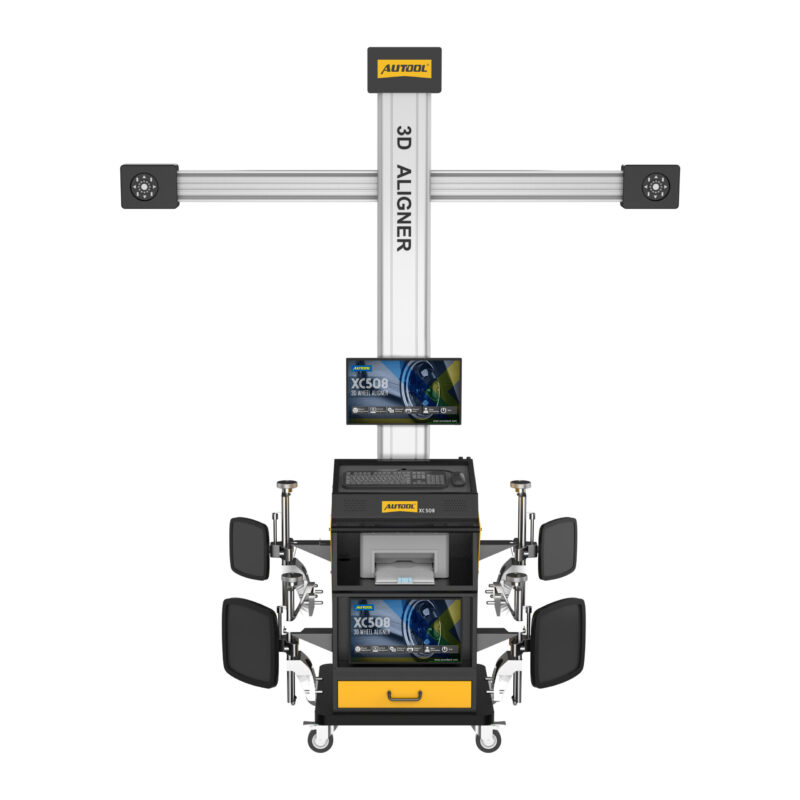
Original price was: $7999.00.$6999.00Current price is: $6999.00.
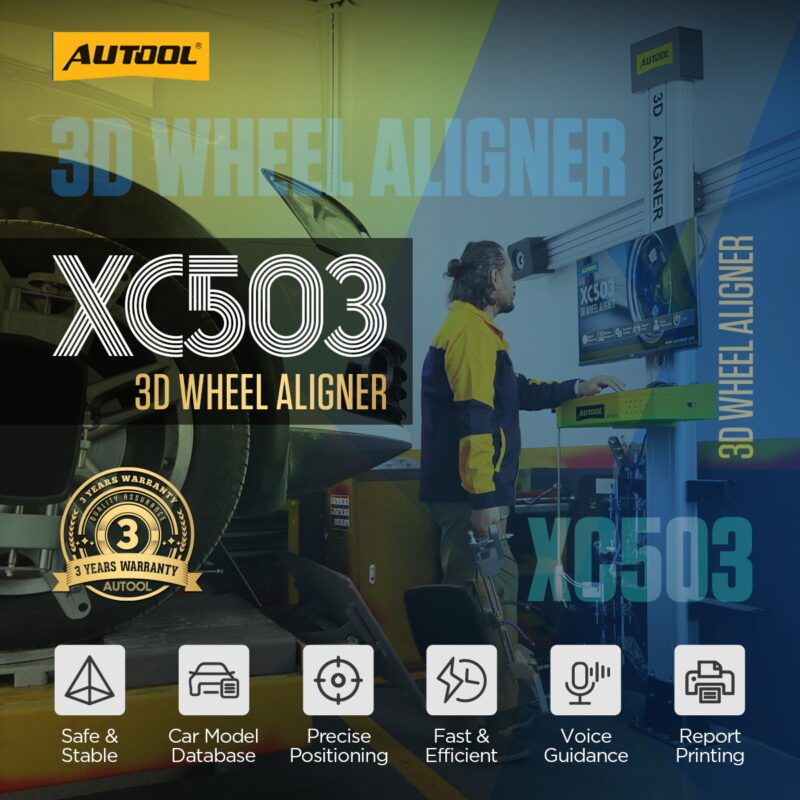
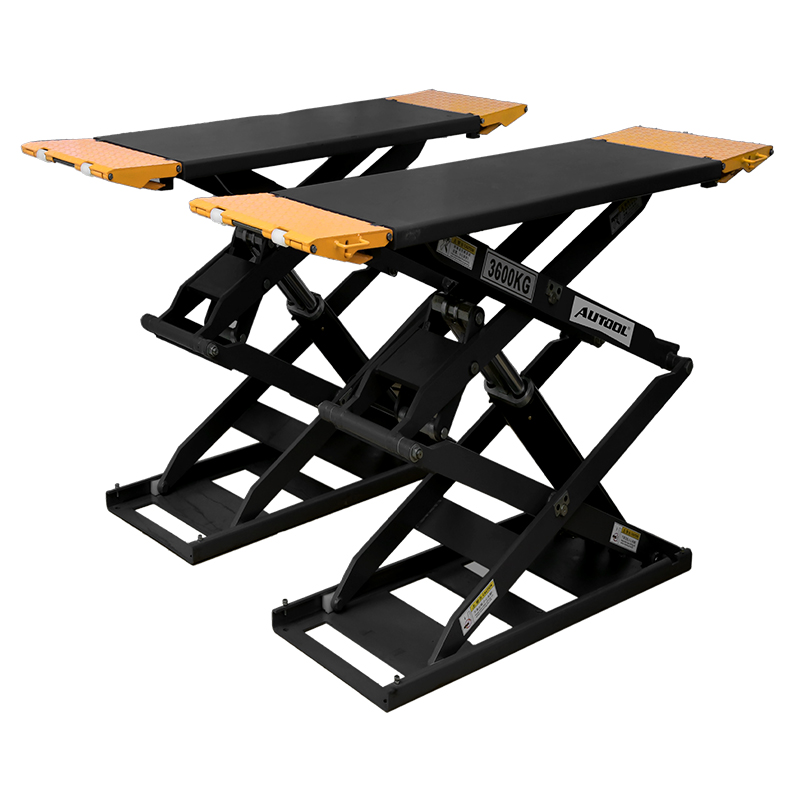


3. Does it support height adaptation & auto-alignment?
In daily alignment operations, time equals cost.
Practical challenges with traditional alignment methods
Many conventional wheel alignment systems still rely on:
- Manual, repetitive vehicle height adjustments
- Manual sensor position verification
- Multiple calibrations before entering inspection
- Lift type restrictions (e.g., four-post lifts only)
During peak hours, these steps significantly slow workstation turnover.
Transformation through Adaptive Height Recognition
Equipment supporting adaptive vehicle height recognition and auto-alignment enables:
- Reduced manual intervention steps
- Simplified operational complexity
- Shorter per-vehicle alignment time
For repair shops, this not only boosts efficiency but also reduces reliance on “highly experienced technicians.”


4. Does it support printing alignment reports?
When providing repair recommendations, whether a customer accepts the service often hinges on one question: “Why do this? What’s the rationale? Can you prove the issue with data?”Data is the core of building trust.
When repair shops can show customers:
- Pre-alignment parameters (outside standard range)
- Post-adjustment parameters (back within standard range)
- Clear, intuitive comparison reports
Customers better understand:
- Why wheel alignment is necessary
- Why tires wear unevenly
- Why the vehicle handles more stably after adjustment
Printing reports ≠ optional
In practice, printed reports directly impact conversion rates, especially for:
- Tire Replacements
- Suspension Repairs
- Repeat Customer Visits
Therefore, reliable, clear report output has become a fundamental requirement for professional wheel alignment systems.
5. After-Sales Support and Long-Term Update Costs
Many repair shops focus solely on the initial price when purchasing equipment, overlooking critical long-term operational issues.
Key Practical Considerations to Verify
Before selecting a wheel alignment machine, clarify the following:
- Are software updates charged?
- Are periodic fees required to unlock features?
- Is the calibration process complex and frequent?
- Is technical support timely and clear?
These factors will gradually reveal cost differences after 1–3 years of equipment use.
Choosing equipment is essentially selecting a long-term partner
For repair shops, a wheel alignment machine is often used for many years.
A truly rational choice should be:
- Functionality meets daily needs
- Data support remains available long-term
- Usage costs are clear and controllable
Wheel Alignment Machine For Sale
-13%
HOT
Original price was: $7999.00.$6999.00Current price is: $6999.00.
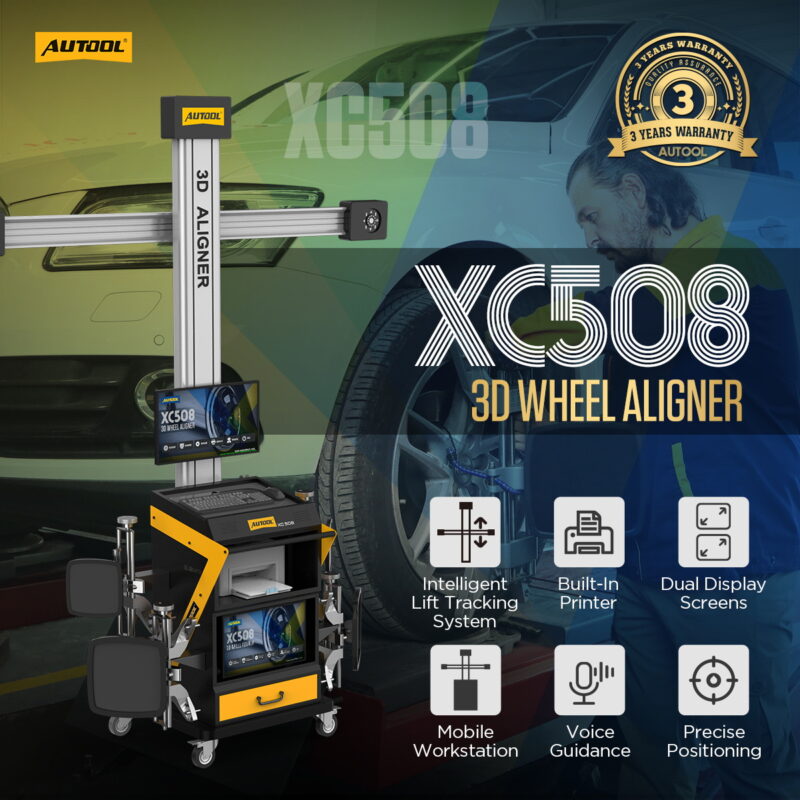
👉 If you’re seeking a wheel alignment machine suitable for auto repair shops—one with comprehensive features, a database that receives long-term updates, and a balance of efficiency and ease of use—consider exploring the AUTOOL XC508.
Get 5% Off for new customers plus a 3‑year warranty on all wheel alignment machines for cars!
📩 Contact Us Today:
• WhatsApp: +86 189 2647 7404
• Email: shop@autooltech.com
 Home
Home Shopping Guide
 Product
 Wheel Aligner Machine
 Smoke Leak Detector
 Fuel Injector Tester
 Brake Fluid Exchanger
 Dry lce Blasting Machine
 Walnut Sand De-Carbon Cleaner
 Refrigerant Recovery Machine
 Articulating Borescope
 Transmission Fluid Exchanger
 Spark Plug Tester
 Battery System Tester
 Engine Pressure Tester
 Diagnostic Multimeter
 Key Frequency Tester
 Maintenance Environment Tester
 Pneumatic Oil Drainer & Extractor
 Oil Analysis Tester
 Circuit Tester
 OBD Diagnostic Tool
 Digital Manifold Gauge
 Inverter Programming Power Supply
 EV Charging
 Used Car Diagnostic Tester
 Cooling System Tester and Filler
 Workshop Tool Storage Series
 EV Battery Pack Air Tightness Tester
 Wheel Alignment Machines
 ACCESSORIES&OTHER
 Help Center
 News
News Track My Order
 Online Support
 Affiliate Marketing