


AUTOOL Blog, Repair Information
Can a Regular Sandblaster replace a Walnut Blasting Machine for carbon cleaning?
Many car owners face common vehicle problems, and thick carbon buildup in the engine due to long-term driving is definitely one of them. This buildup leads to issues like unstable idling and weak acceleration. There are various ways to clean engine carbon deposits nowadays, and the Walnut Blasting Machine is the most mainstream and popular option. However, many people may have this question. Both are sandblasting equipment, so what sets a professional automotive engine carbon deposit cleaning machine apart from an ordinary sandblaster? Can an ordinary sandblaster replace the professional one? My answer is no. Professional equipment exists for a reason. Let’s take a closer look at why.

Core Media and Media Control
The core of sandblasting cleaning lies in the abrasive medium. These two devices use entirely different logics to select and control abrasive media. This key difference directly determines whether the engine sustains damage.
Walnut Blasting Machine
- Exclusive abrasive: It is standard equipped with natural walnut sand (particle size mainly 0.8-1.2mm, adjustable according to the cleaning part), with moderate hardness (Mohs hardness 2.5-3) and a loose, tough texture. During the grinding process, it peels off carbon deposits thoroughly. It does not scratch precision engine components like aluminum alloy/cast iron cylinder blocks, valve sealing surfaces, and intake manifold inner walls. Moreover, it will not leave hard debris after grinding. The Walnut Blasting Machine relies on this special abrasive to achieve safe cleaning.
- Precise medium control: It has a built-in sand control precision regulating valve and a stainless steel anti-clogging sand outlet pipe, ensuring continuous and uniform sand output. The sand output can be accurately adjusted according to the cleaning part (such as intake valve, combustion chamber, throttle valve) to avoid “sand running and sand breaking”. It features a sand recovery and filtration system that separates contaminants, recycles walnut sand and lowers consumable costs. All high-performance walnut blasting machines include this precise control system.
- No-residue design: Walnut sand is a natural plant abrasive. Even if there is a small amount of residue, it will decompose with high-temperature combustion when the engine is working, without causing oil circuit blockage or cylinder block wear. It is suitable for the cleaning needs of the engine’s closed space. This feature makes the walnut blasting equipment stand out in automotive maintenance scenarios. The walnut blasting kit also includes accessories that help minimize residue risks.
Ordinary Sandblasters
- Industrial abrasive: It usually uses quartz sand, emery, steel shot, river sand, etc., which have extremely high hardness. They are mainly used for derusting, removing welding slag, and surface roughening in industrial scenarios. If used directly on the engine, they will severely scratch the cylinder block, valve sealing surface, and intake manifold, leading to secondary faults such as engine air leakage, oil burning, and unstable idling. Unlike the Walnut Blasting Machine, ordinary sandblasters use abrasives that are harmful to engines.
- Rough medium control: It has no exclusive sand control regulating valve, and the sand output and sandblasting pressure are mostly fixed values, which cannot be accurately adjusted. It is prone to problems such as “excessive sand output impacting precision components and insufficient sand output failing to remove carbon deposits”. In addition, there is no dedicated sand recovery system, so the abrasive is consumed once, resulting in high cost and easy residue. This is an obvious disadvantage compared with professional walnut blasting equipment.
- Great residue hazard: Industrial abrasives are hard inorganic particles. If there is residue, it will form “abrasive wear” in the engine, intensify the friction of pistons, cylinder walls, and valves, and directly lead to engine cylinder scuffing and scrapping in severe cases. A reliable walnut blasting tool will never have such risks, and a complete walnut blasting kit can further ensure cleaning safety.
-
 1KG Walnut Sand For AUTOOL HTS558,HTS518,HTS559 and HTS678
$15.90 – $120.00
1KG Walnut Sand For AUTOOL HTS558,HTS518,HTS559 and HTS678
$15.90 – $120.00
Pressure and Sand Delivery System
The intake valve, combustion chamber, and intake manifold of an automotive engine are all precision cavities, which have extremely high requirements for the matching of sandblasting pressure and sand output. The pressure designs of the two are completely suitable for different scenarios, which is also one of their core differences.
Walnut Blasting Machine
- Low pressure and precise adjustment: The working air pressure can be flexibly adjusted according to the thickness of carbon deposits and the cleaning part, and the air pressure is accurately matched with the sand output. Low pressure and small sand output are suitable for cleaning small parts such as throttles and spark plugs; medium pressure and medium sand output are suitable for cleaning intake valves and intake manifolds; high pressure and large sand output are suitable for cleaning thick carbon deposits in the combustion chamber. This not only ensures the cleaning effect but also avoids component damage caused by high-pressure impact.
- Exclusive sandblasting components: It is equipped with a multi-angle elbow spray gun and special engine sealing joints, which can extend into the engine for cleaning through spark plug holes and intake manifold interfaces without large-scale disassembly. The spray gun is ergonomically designed for single-person operation; the sandblasting pipe is made of soft and wear-resistant material that will not scratch engine pipelines. The walnut blasting kit usually includes these dedicated components to improve operation convenience.
- Pressure stabilization design: It features a built-in pressure stabilizing valve that maintains steady air pressure during operation. This steady pressure avoids the issue of incomplete carbon deposit removal and impact damage to components caused by sudden pressure changes. This stable performance is one of the core advantages of high-quality walnut blasting equipment.
Ordinary Sandblaster
- Fixed industrial high pressure: The working air pressure is mostly between 0.8-2.0MPa, and most of them are fixed values without refined pressure adjustment function. Industrial scenarios pursue “quick peeling of stubborn stains”, but when used on engines, high pressure will directly impact the valve sealing surface and in-cylinder coating, leading to seal failure and coating peeling.
- General sandblasting components: The spray gun is an industrial direct-injection type without multi-angle elbows, which cannot extend into complex engine cavities (such as combustion chambers and the back of intake valves). In addition, there is no dedicated sealing joint, which is prone to abrasive leakage and dust diffusion during sandblasting, resulting in incomplete cleaning and polluted working environment.
- No pressure stabilization function: The air pressure fluctuates greatly under the influence of the air compressor, which is difficult to control during operation. It is very easy to occur that “high pressure damages components and low pressure cannot remove carbon deposits”.
Structure and Function Design
The Walnut Blasting Machine is purpose-built for cleaning automotive engine carbon deposits, boasting plenty of specialized structural and functional designs. By contrast, ordinary sandblasters are engineered as industrial general-purpose equipment, with no designs tailored to automotive scenarios at all.
Walnut Blasting Machine
- Sand Recycling System: Equipped with a core filtration screen + cyclone separation recovery system, achieving ≥80% recovery efficiency (≥90% for premium models). Effectively separates cleaned walnut blasting media from carbon deposits, oil residue, and debris for reuse, significantly reducing consumable costs and adapting to high-frequency operations in auto repair shops.
- Eco-Friendly Dust-Proof Design: The sealed hopper prevents dust dispersion during blasting. Equipped with a dust collection system, it safeguards operators from inhaling walnut shell dust, protecting respiratory health while meeting auto repair shops’ environmental compliance requirements.
- Portable/Fixed Dual Adaptability: Available in portable (unit ≤20kg, with swivel casters + carrying handle) and fixed (floor-standing, mountable to workbench) configurations. The portable model suits mobile repairs and compact roadside shops, while the fixed model fits dedicated workstations in large auto shops. Pneumatic models require no fixed power source, enabling outdoor operations.
- Non-Damaging Auxiliary Function: Select premium models feature an air-blow mode. After cleaning, switch to pure air blowing to remove residual walnut shell grit from the engine interior, completely eliminating potential hazards.
Ordinary Sandblaster
- No recycling function: Abrasives are single-use with no recovery or filtration system. During automotive cleaning, abrasives mix with carbon deposits and are discarded directly. It creates exorbitant consumable costs that fail to align with auto repair shops’ cost control requirements.
- Lacks Dust-Proof and Eco-Friendly Design: Industrial settings often involve outdoor or large workshop operations. Without sealed dust-proofing, blasting generates widespread dust. Indoor use in auto repair shops contaminates workshop equipment. Operators inhaling industrial abrasive dust face occupational hazards like pneumoconiosis.
- Industrial Heavy-Duty Design: Typically fixed heavy-duty platforms with substantial overall weight. Lacking casters or carrying handles, they are immobile and cannot be transported for on-site repairs. They require connection to a fixed power source and high-power air compressor, offering extremely poor adaptability.
- No Auxiliary Cleaning Function: Only features a sandblasting mode without air-blowing functionality. This results in severe abrasive residue after cleaning, directly causing secondary engine failures.
-25%
HOT
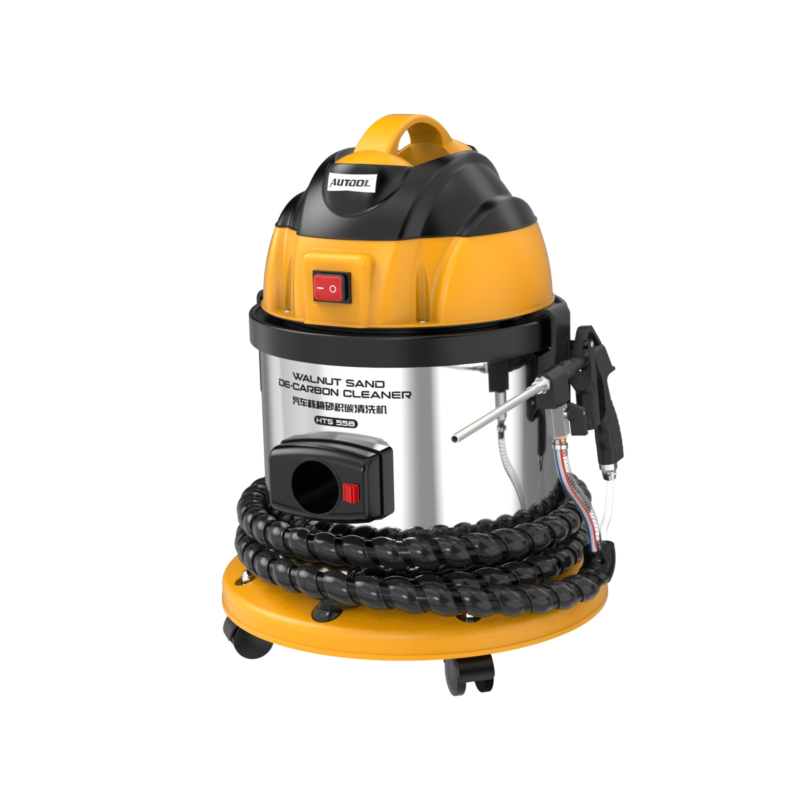
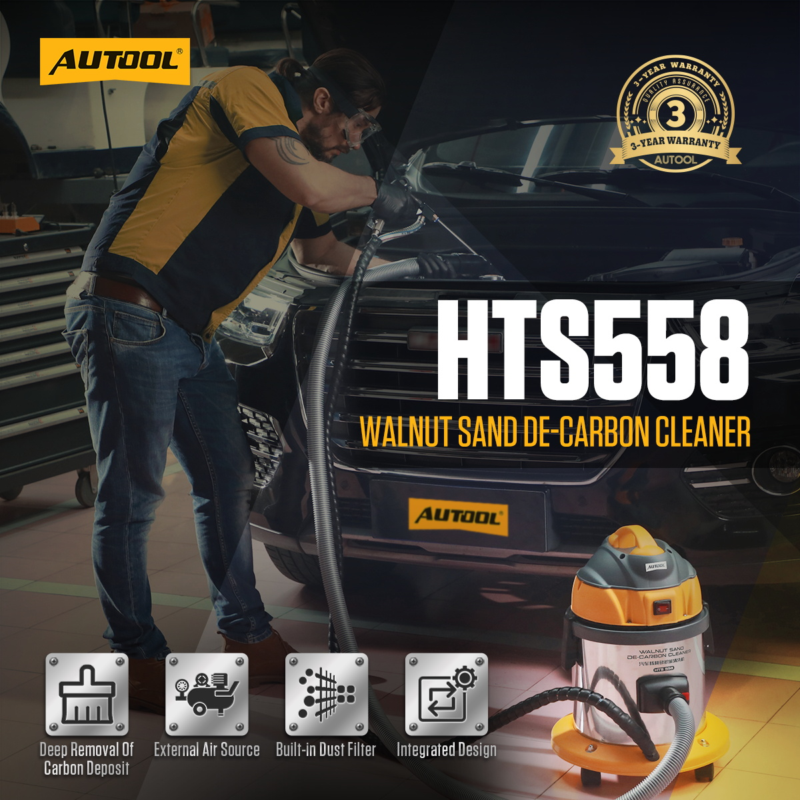
$359.00 – $389.00
-11%
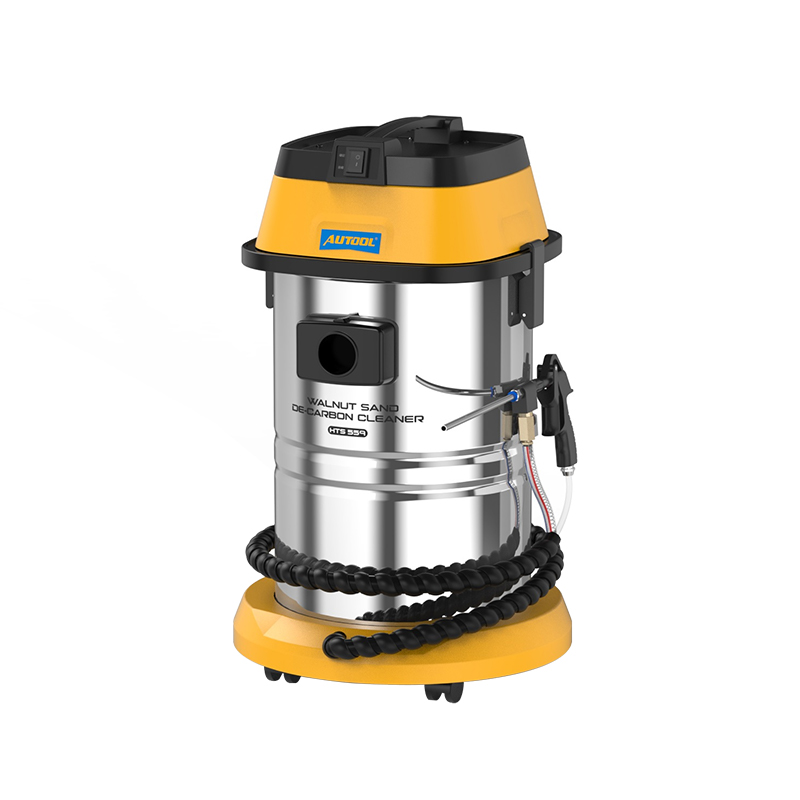
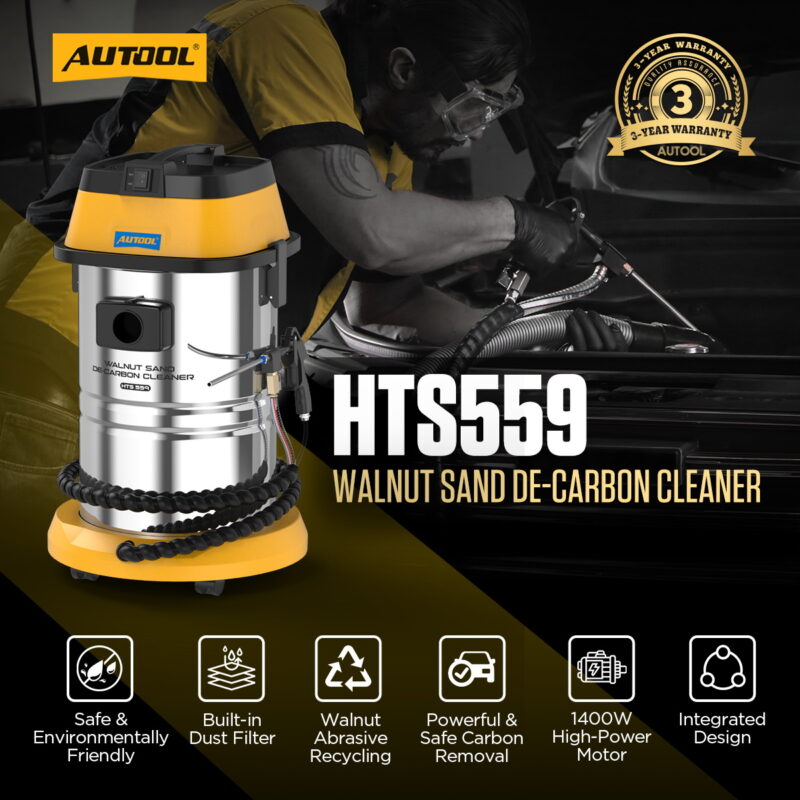
Original price was: $615.00.$549.00Current price is: $549.00.
-12%
-17%
Original price was: $2895.00.$2399.00Current price is: $2399.00.
Operation and Safety
The workshop environment demands rapid, efficient, single-operator procedures, with technicians typically lacking formal industrial sandblasting training. The operational complexity and safety requirements differ entirely between the two scenarios:
Walnut Blasting Machine
- Simple Operation: The control panel is specifically designed for automotive repair scenarios. Operation requires only three steps: “Power On – Adjust Air Pressure – Adjust Sand Output.” One-button power-on/parameter adjustment allows new users to get started within half an hour without professional training. This single-operator model requires no coordination and meets the daily order-taking needs of auto repair shops.
- Comprehensive Safety Features: Equipped with anti-leakage protection and overload protection, the device automatically shuts down during malfunctions. Using natural walnut shells as abrasive material, it is non-corrosive and non-irritating, posing no harm even upon skin contact. Standard protective gear—a dust mask, gloves, and safety goggles—is sufficient for operation.
- Compatible with Auto Repair Shop Infrastructure: The pneumatic model directly interfaces with existing 7.5-11kW air compressors, eliminating the need for high-power compressor upgrades. The electric model operates on standard 220V household power, plug-and-play, aligning with typical auto shop electrical systems.
Ordinary Sandblaster
- Complex operation: Professional industrial sandblasting training is required. It is necessary to adjust multiple parameters such as air pressure, sand output, and spray gun angle. Most of them are double-person cooperation models, with one person operating the spray gun and one person assisting in feeding, which is completely unsuitable for the single-person operation scenario of auto repair shops. Unlike the Walnut Blasting Machine, ordinary sandblasters are not suitable for the fast-paced operation of auto repair shops. They also require more professional skills than a common walnut blasting tool.
- High safety protection requirements: Industrial abrasives are hard particles that are easy to rebound and hurt people during sandblasting, and most of the dust is highly toxic or corrosive (such as emery and quartz sand). Operators must wear professional gas masks, impact-resistant goggles, and heavy-duty protective clothing during operation. Auto repair shops, however, generally don’t have this type of protective equipment on hand.
- High supporting requirements: It needs a high-power air compressor (≥15kW) and 380V industrial electricity. Most auto repair shops do not have such supporting conditions. If additional related equipment is purchased, the cost is extremely high.
Cleaning Effectiveness and Subsequent Impact
The two methods deliver vastly different final results when cleaning carbon deposits from vehicles. This is exactly why auto repair shops must choose professional walnut shell blasting machines.
Walnut Blasting Machine
- Horough Cleaning: Walnut shell grit penetrates deep into complex engine cavities (such as behind intake valves, combustion chambers, and around fuel injectors). It physically grinds away stubborn carbon deposits without leaving any cleaning blind spots. After cleaning, the engine idles smoothly, accelerates powerfully, and fuel consumption returns to normal levels.
- No Subsequent Failures: The abrasive leaves no residue and causes no damage to precision components. After cleaning, the engine requires no additional disassembly or maintenance—it can be reinstalled and used immediately. Secondary issues like oil burning, air leaks, or idle vibration will not occur.
- Engine Protection: The natural walnut shell grit employs a gentle grinding method that does not damage the engine’s original coatings or sealing surfaces. Instead, it effectively removes carbon deposits from these coatings, extending the engine’s service life.
Ordinary Sandblaster
- Incomplete cleaning: Spray guns cannot reach complex engine cavities, only removing surface carbon deposits. Core areas such as intake valve backs and combustion chambers remain uncleaned. This means engine malfunctions see no meaningful improvement after cleaning.
- Recurring Secondary Failures: Residual industrial abrasives cause cylinder scoring, oil burning, and fuel line blockages. High-pressure impacts lead to valve seal failure and cylinder coating peeling, ultimately worsening engine damage or even total failure. Repair shops face substantial compensation claims.
- Engine Damage: Hard abrasives scratch precision engine components, accelerating wear and significantly shortening engine lifespan.

Summary: Core Selection Principles
Automotive Engine Carbon Deposits Cleaning: Only use specialized walnut shell blasting machines. Prioritize models with adjustable air pressure/blasting volume, integrated abrasive recycling systems, and sealed dust-proof designs to meet routine operational needs.
Industrial Rust Removal / Weld Slag Removal: Standard sandblasting machines may be used. Select abrasives and air pressure according to industrial requirements.
Avoid pitfalls: Never modify standard sandblasters for automotive carbon deposit cleaning. Such modifications fail to fix core issues including abrasive damage, residue buildup, and pressure instability. They also greatly heighten the risk of secondary malfunctions, customer complaints, and financial losses.
To put it simply, walnut shell carbon deposit cleaners function as specialized custom models for automotive carbon removal. Standard sandblasters work as industrial general-purpose models for everyday industrial applications. Their design philosophies and intended applications are fundamentally different. Directly using a standard sandblaster for automotive carbon cleaning not only fails to achieve the desired results but also risks damaging core components.
👉Contact us now to purchase a walnut blasting machine and enjoy exclusive discounts for new customers!
📩 Contact Us Today:
• WhatsApp: +86 189 2647 7404
• Email: shop@autooltech.com


 Home
Home Shopping Guide
 Product
 Wheel Aligner Machine
 Smoke Leak Detector
 Fuel Injector Tester
 Brake Fluid Exchanger
 Dry lce Blasting Machine
 Walnut Sand De-Carbon Cleaner
 Refrigerant Recovery Machine
 Articulating Borescope
 Transmission Fluid Exchanger
 Spark Plug Tester
 Battery System Tester
 Engine Pressure Tester
 Diagnostic Multimeter
 Key Frequency Tester
 Maintenance Environment Tester
 Pneumatic Oil Drainer & Extractor
 Oil Analysis Tester
 Circuit Tester
 OBD Diagnostic Tool
 Digital Manifold Gauge
 Inverter Programming Power Supply
 EV Charging
 Used Car Diagnostic Tester
 Cooling System Tester and Filler
 Workshop Tool Storage Series
 EV Battery Pack Air Tightness Tester
 Wheel Alignment Machines
 ACCESSORIES&OTHER
 News
News Help Center
 Custom Solutions (OEM & ODM)
 Track My Order
 Online Support