



AUTOOL Blog, Purchase Guides
In the New Energy Era, Does the Walnut Blasting Machine Still Have a Market?
As the ownership of new energy vehicles continues to rise, many auto repair professionals are feeling anxious. Electric cars do not require engine carbon deposit cleaning, and the maintenance demand for traditional fuel-powered vehicles seems to be shrinking. Will the walnut blasting machine, which has long generated profits through carbon deposit cleaning, be eliminated by the times? On the contrary, the huge stock of fuel-powered vehicles and the unique carbon deposit problems of hybrid models ensure the long-term market demand for the walnut blasting machine. Moreover, they make this essential tool a “profit moat” for auto repair shops in the new energy era.
Huge Stock of Fuel-powered Vehicles Sustains a Strong Rigid Demand Market
It is true that the penetration rate of new energy vehicles is on the rise, but this does not mean fuel-powered vehicles will quickly disappear from the market. According to a report by BloombergNEF, the global ownership of new energy passenger vehicles will exceed 100 million by 2026. However, during the same period, fuel-powered vehicles will still dominate the market in terms of stock. In addition, although fuel-powered vehicles have passed their sales peak, their stock replacement cycle lasts as long as 10 to 15 years. For auto repair shops, countless fuel-powered vehicles will need regular carbon deposit cleaning for the next decade or more.
As we all know, carbon deposits are an inherent problem for fuel-powered vehicles. Low-speed driving and frequent starts and stops during daily commutes, as well as differences in fuel quality, will all cause carbon deposits to build up in key parts such as intake manifolds and intake and exhaust valves. This buildup will further lead to reduced power, soaring fuel consumption, and cold-start jitter. Recognized as an efficient and gentle carbon removal tool in the industry, the walnut blaster tool uses walnut shell abrasives with moderate hardness. It can completely strip stubborn carbon deposits without damaging precision engine components. It is a core piece of equipment for in-depth fuel-powered vehicle maintenance, and its status as a must-have tool has never changed.
Hybrid Models Have Stubborn Carbon Deposits, Spurring New Market Growth
More noteworthy than fuel-powered vehicles are the carbon deposit issues of hybrid models, including plug-in hybrids and extended-range electric vehicles. These models not only retain a complete engine system, but their unique operating modes also make carbon deposit problems more severe and frequent. This has directly created new demand for the walnut blasting equipment. Many auto repair professionals mistakenly believe that hybrid models use their engines less frequently, so there is no need to clean carbon deposits. However, the reality is quite the opposite.
According to disassembly data from international organizations, the carbon deposit thickness on the intake valves of 3-year-old hybrid models is about 1.8 times that of fuel-powered vehicles with the same mileage. After-sales data from top domestic 4S stores also shows that the engine failure rate of hybrid vehicles caused by carbon deposits is more than 30% higher than that of fuel-powered vehicles. The core reasons lie in the three key operating characteristics of hybrid models:
First, hybrid engines run intermittently with frequent cold starts and short operating cycles, keeping temperatures below the 70°C optimal level. JASO research shows this raises carbon deposit formation 2.3-fold, and short runs fail to burn deposits away, causing hardening layers. Daily pure-electric commuting leaves engines idle for days or weeks. Stagnant fuel oxidizes into gummy carbon that clings tightly to components on restart. Most hybrids use GDI engines with tiny, cleanliness-sensitive nozzles. Carbon deposits hurt power and fuel efficiency, and may distort fuel atomization, triggering severe engine issues.
More importantly, the carbon deposits in hybrid models are mostly low-temperature residual carbon deposits. They are much harder to clean than the high-temperature sintered carbon deposits in traditional fuel-powered vehicles. Traditional methods such as chemical injection cleaning have limited effects. In contrast, the walnut blasting machine uses high-pressure airflow to drive walnut sand particles. It precisely impacts key parts like intake manifolds and intake and exhaust valves, completely stripping away stubborn carbon deposits. The entire process requires no disassembly and will not damage precision engine components, making it the optimal solution for cleaning carbon deposits in hybrid models. In the actual maintenance of models such as the Lexus ES300h and Toyota Camry Hybrid, walnut blasting has become a necessary in-depth maintenance item. Many car owners take the initiative to have carbon deposits cleaned at repair shops after driving 20,000 to 30,000 kilometers.
Versatile and Profitable, It Remains a Core Equipment for Auto Repair Shops
In the new energy era, the core competitiveness of auto repair shops lies in accurately capturing the maintenance needs of the existing stock of fuel-powered vehicles and the growing number of hybrid models. The versatility of the walnut blasting equipment fully meets this market demand. Whether it is regular carbon deposit cleaning for traditional fuel-powered vehicles or tackling stubborn carbon deposits in hybrid models, it can meet the cleaning needs of mainstream models such as Audi, BMW, Mercedes-Benz, Toyota, and Lexus when paired with corresponding adapters. Models like the AUTOOL HTS678 walnut blaster tool come with 23 specialized adapters, covering most vehicle models available on the market.
From a profitability perspective, new energy vehicles have few maintenance items and low unit prices. Many auto repair shops are struggling with a lack of business. On the other hand, carbon deposit cleaning is a high-frequency, high-demand service for both fuel-powered and hybrid vehicles. It features high unit prices and easy operation, effectively boosting the revenue and average transaction value of auto repair shops. For auto repair professionals, the walnut blasting machine is not an outdated device on the verge of elimination. Instead, it is a key tool to cope with the impact of new energy vehicles and unlock profits in the existing market.
Recommended Product: AUTOOL HTS678 Walnut Blasting Machine | Efficiently Cleans Engine Carbon Deposits
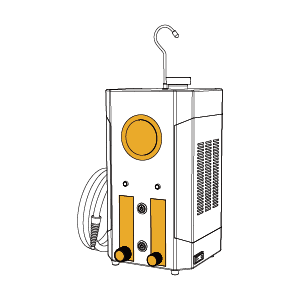
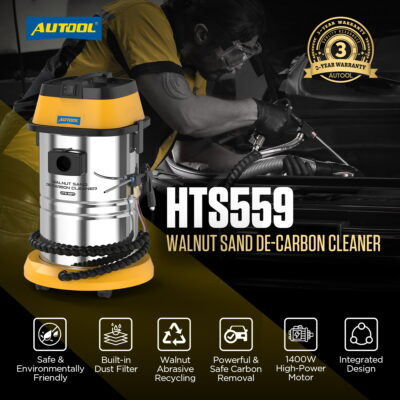
The AUTOOL HTS678 Walnut Blasting Machine is currently one of the best-selling mid-to-high-end models on the market. It is mainly designed to remove heavy carbon deposits on the back of intake valves and inside combustion chambers. It is especially suitable for cleaning the intake valves of intake manifold injection engines. The machine uses high-pressure airflow to propel walnut sand particles. It grinds and washes away internal engine carbon deposits through pure physical impact. A small amount of walnut sand powder may remain after cleaning, which can be easily blown away in subsequent procedures.

✅ Dual Modes + Adjustable Pressure: Cleans Intake Manifolds/Intake & Exhaust Valves Without Disassembly
You can switch between standard and expert modes with just one click, making it easy for both novices and professional technicians to operate. The precise pressure adjustment knob adapts to different engine operating conditions. It can clean carbon deposits in intake manifolds and intake and exhaust valves without disassembling any components. This saves time and effort while preventing damage to precision parts.
✅ 1500W Power + External Air Source: Powerful Carbon Removal with Zero Residue
The 1500W high-performance motor works with an external air source to greatly enhance the impact force of walnut sand abrasion. It easily strips away stubborn carbon deposits, ensuring that engine pipelines are thoroughly cleaned without any blind spots. This helps restore the engine’s optimal power performance.
✅ Automatic Abrasive Recycling & Filtration: Reusable Material Reduces Waste
The walnut blasting equipment integrates spraying, cleaning, and recycling functions in one step. Its built-in dust filter separates walnut sand abrasives from carbon deposits and oil stains. The walnut sand can be reused, which lowers the cost of purchasing consumables. At the same time, it prevents carbon deposits from damaging the exhaust system under high temperatures.
✅ 23 Adapters for Multi-Vehicle Compatibility & 360° Casters for Easy Operation
The walnut blaster tool comes with 23 specialized adapters, making it compatible with mainstream vehicle brands including Audi, BMW, Mercedes-Benz, and Land Rover. Its 360° swivel caster design allows for flexible movement, making operation in repair workshops much more convenient.
✅ 3-Year Warranty + Lifetime Maintenance: Worry-Free After-Sales Service
For non-human-caused damages, the product includes a 3-year free parts replacement service. The entire machine is also backed by lifetime maintenance support. After-sales inquiries are responded to within 24 hours. This professional guarantee gives auto repair professionals peace of mind during maintenance work.
In summary, the new energy era is not eliminating the walnut blasting machine. Instead, it is eliminating rigid business mindsets that fail to adapt to market changes. The large stock of fuel cars and hybrid carbon deposit challenges ensure long-term demand for engine carbon cleaning. With its core advantages of high efficiency, gentle cleaning, and wide compatibility, the walnut blasting equipment remains an indispensable core device for auto repair shops. Its market value will not decline; on the contrary, it will continue to rise as hybrid models become more popular.
👉Contact us now to purchase a walnut blasting machine and enjoy exclusive discounts for new customers!
📩 Contact Us Today:
• WhatsApp: +86 189 2647 7404
• Email: shop@autooltech.com
 Home
Home Shopping Guide
 Product
 Wheel Aligner Machine
 Smoke Leak Detector
 Fuel Injector Tester
 Brake Fluid Exchanger
 Dry lce Blasting Machine
 Walnut Sand De-Carbon Cleaner
 Refrigerant Recovery Machine
 Articulating Borescope
 Transmission Fluid Exchanger
 Spark Plug Tester
 Battery System Tester
 Engine Pressure Tester
 Diagnostic Multimeter
 Key Frequency Tester
 Maintenance Environment Tester
 Pneumatic Oil Drainer & Extractor
 Oil Analysis Tester
 Circuit Tester
 OBD Diagnostic Tool
 Digital Manifold Gauge
 Inverter Programming Power Supply
 EV Charging
 Used Car Diagnostic Tester
 Cooling System Tester and Filler
 Workshop Tool Storage Series
 EV Battery Pack Air Tightness Tester
 Wheel Alignment Machines
 ACCESSORIES&OTHER
 News
News Help Center
 Custom Solutions (OEM & ODM)
 Track My Order
 Online Support